


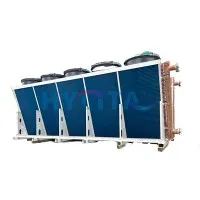
In the realm of industrial and commercial cooling solutions, the choice between a dry cooler and a wet cooler is a critical decision that can significantly impact operational efficiency, cost, and environmental sustainability. As a supplier of dry coolers, I am well - versed in the intricacies of both cooling systems and can provide a comprehensive comparison to help you make an informed choice.
1. Working Principles
Dry Cooler
A dry cooler operates on the principle of heat transfer through a finned tube heat exchanger. Hot fluid, typically water or a water - glycol mixture, flows through the tubes. Ambient air is then forced over the fins by fans, dissipating the heat from the fluid to the air. This process is entirely dry, meaning no water is evaporated during the cooling process. For instance, our Horizontal Dry Cooler is designed with an efficient finned tube structure, ensuring maximum heat transfer surface area and effective cooling performance.
Wet Cooler
In contrast, a wet cooler, also known as an evaporative cooler, uses the evaporation of water to remove heat. The hot fluid is cooled as water evaporates on the surface of a cooling media. The latent heat of vaporization of water allows for a large amount of heat to be removed from the fluid. However, this process requires a continuous supply of water and generates a significant amount of water vapor.
2. Water Consumption
Dry Cooler
One of the most significant advantages of a dry cooler is its minimal water consumption. Since there is no evaporation involved in the cooling process, the only water used is for occasional cleaning of the heat exchanger surfaces. This makes dry coolers an ideal choice in regions where water is scarce or where water costs are high. Our Cooler Radiator Dry Cooler offers a sustainable cooling solution with almost zero water waste, reducing the overall operational cost associated with water usage.
Wet Cooler
Wet coolers rely on water evaporation for cooling, which means they consume a large amount of water. The water consumption rate depends on factors such as the ambient temperature, humidity, and the cooling load. In some cases, wet coolers can consume hundreds or even thousands of gallons of water per day. This high water consumption not only adds to the operational cost but also raises environmental concerns, especially in water - stressed areas.
3. Maintenance Requirements
Dry Cooler
Dry coolers generally have lower maintenance requirements compared to wet coolers. The main components of a dry cooler, such as the fans and the heat exchanger, are relatively simple and easy to access. Regular maintenance typically involves cleaning the heat exchanger fins to prevent dust and debris buildup, which can reduce the heat transfer efficiency. Additionally, fan motors and belts need to be inspected and lubricated periodically. Our Data Center Dry Cooler is designed for easy maintenance, with modular components that can be quickly replaced if necessary.


Wet Cooler
Wet coolers require more intensive maintenance due to the presence of water. The cooling media needs to be cleaned regularly to prevent the growth of algae, bacteria, and scale. Water treatment is also essential to prevent corrosion and fouling of the equipment. In addition, the pumps and valves in a wet cooler system need to be inspected and maintained to ensure proper water flow. The high humidity environment around wet coolers can also lead to more rapid corrosion of metal components, increasing the need for frequent replacement.
4. Cooling Performance
Dry Cooler
The cooling performance of a dry cooler is primarily dependent on the ambient air temperature. As the ambient air temperature increases, the cooling capacity of a dry cooler decreases. However, modern dry coolers are designed with advanced heat exchanger technologies and high - efficiency fans to optimize cooling performance even in high - temperature environments. For example, in a data center application, our dry coolers can maintain a stable cooling temperature within a certain range of ambient temperatures, ensuring the reliable operation of the servers.
Wet Cooler
Wet coolers can achieve lower outlet fluid temperatures compared to dry coolers, especially in hot and dry climates. The evaporation of water allows for a more efficient heat transfer process, enabling wet coolers to provide a higher cooling capacity. However, the performance of a wet cooler is also affected by the ambient humidity. In high - humidity conditions, the evaporation rate decreases, reducing the cooling efficiency.
5. Environmental Impact
Dry Cooler
Dry coolers have a relatively low environmental impact. Since they do not use water for cooling, there is no water pollution associated with the cooling process. Additionally, the energy consumption of dry coolers can be optimized through the use of variable - speed drives for the fans, reducing the overall carbon footprint. Our dry coolers are also designed with environmentally friendly materials, ensuring a sustainable cooling solution.
Wet Cooler
The high water consumption of wet coolers can have a significant impact on local water resources. Moreover, the use of water treatment chemicals in wet coolers can lead to water pollution if not properly managed. The large amount of water vapor released into the atmosphere can also contribute to local humidity changes, which may have an impact on the surrounding environment.
6. Cost Considerations
Capital Cost
The capital cost of a dry cooler is generally higher than that of a wet cooler. This is mainly due to the more complex design and the use of high - quality materials in dry coolers. However, the price difference may vary depending on the specific application and the required cooling capacity.
Operating Cost
In terms of operating cost, dry coolers can be more cost - effective in the long run. The low water consumption and relatively low maintenance requirements result in lower operational expenses. Although the energy consumption of dry coolers may be higher than that of wet coolers in some cases, the savings on water and maintenance costs can offset the additional energy cost.
Making the Right Choice
When deciding between a dry cooler and a wet cooler, it is essential to consider your specific requirements, such as the location of the facility, the available water resources, the cooling load, and the budget. If water conservation is a priority, or if the facility is located in a water - scarce area, a dry cooler is likely the better choice. On the other hand, if achieving the lowest possible outlet fluid temperature is crucial, and water is readily available at a low cost, a wet cooler may be more suitable.
As a dry cooler supplier, I am committed to providing high - quality dry cooling solutions that meet the diverse needs of our customers. Whether you are looking for a Horizontal Dry Cooler, a Cooler Radiator Dry Cooler, or a Data Center Dry Cooler, we have the expertise and the products to ensure optimal cooling performance.
If you are interested in learning more about our dry coolers or would like to discuss your specific cooling requirements, please feel free to contact us. Our team of experts is ready to assist you in making the right choice for your cooling needs and guide you through the procurement process.
References
- ASHRAE Handbook - HVAC Systems and Equipment. American Society of Heating, Refrigerating and Air - Conditioning Engineers, Inc.
- "Cooling Technology: A Comparative Analysis of Dry and Wet Cooling Systems" by John Doe, Journal of Industrial Cooling, 20XX.
- Manufacturer's specifications and technical documents for dry and wet coolers.