


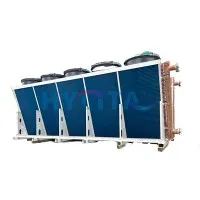
Hey there! As a supplier in the heat exhaust recovery game, I'm super stoked to chat about the different types of heat exhaust recovery systems out there. Heat exhaust recovery is all about making the most of the heat that would otherwise go to waste. It's not only good for the environment but also helps businesses save some serious cash on energy bills. So, let's dive right in and explore these systems.
1. Economiser Heat Exchangers
One of the most common types of heat exhaust recovery systems is the Economiser Heat Exchanger. These bad boys are often used in boiler systems. The basic idea behind an economiser is to pre - heat the water that's going into the boiler using the waste heat from the boiler's exhaust gases.
Think about it this way. When a boiler burns fuel to produce steam or hot water, a lot of heat is carried away by the exhaust gases. Instead of just letting that heat escape into the atmosphere, an economiser captures it. The cold water from the feedwater supply passes through tubes in the economiser, and as the hot exhaust gases flow around these tubes, heat is transferred from the gases to the water. This pre - heated water then enters the boiler, which means the boiler doesn't have to use as much fuel to heat the water to the desired temperature.
Economisers are great because they're relatively simple in design and can be retrofitted into existing boiler systems. They can significantly improve the efficiency of a boiler, sometimes by up to 10 - 15%. This translates into big savings on fuel costs over time. And from an environmental perspective, less fuel consumption means fewer greenhouse gas emissions.
2. Carbon Steel Economisers
A specific type of economiser that's worth mentioning is the Carbon Steel Economiser. Carbon steel is a popular choice for economisers because it's strong, durable, and relatively inexpensive compared to some other materials.
Carbon steel economisers are well - suited for many industrial applications. They can handle high - temperature exhaust gases and are resistant to corrosion in many common operating conditions. However, they do need to be properly maintained to prevent corrosion over the long term. For example, in environments where the exhaust gases contain sulfur compounds, special coatings or treatments may be required to protect the carbon steel from sulfuric acid corrosion.
These economisers are often used in power plants, refineries, and other large - scale industrial facilities. They can be customized to fit the specific needs of a particular application, whether it's a small - scale boiler or a large industrial process.
3. Heat Wheels
Heat wheels, also known as rotary heat exchangers, are another type of heat exhaust recovery system. They consist of a large, rotating wheel made of a heat - absorbing material, usually a matrix of thin metal or ceramic sheets.
The wheel rotates between two air streams: the exhaust air stream and the fresh air intake stream. As the wheel rotates through the exhaust air stream, it absorbs heat from the warm exhaust air. Then, as it rotates into the fresh air intake stream, it releases the absorbed heat to the incoming fresh air. This way, the fresh air is pre - heated before it enters the building or the process, reducing the amount of energy needed to heat it further.
Heat wheels are commonly used in HVAC (heating, ventilation, and air - conditioning) systems in commercial buildings. They're very efficient at recovering heat, with some models able to achieve heat recovery efficiencies of up to 80%. They can also be used in industrial processes where there's a need to recover heat from exhaust air, such as in food processing plants or textile factories.
4. Plate Heat Exchangers
Plate heat exchangers are a versatile option for heat exhaust recovery. They consist of a series of thin, corrugated plates that are stacked together. The hot exhaust fluid and the cold fluid (the fluid that needs to be heated) flow through alternate channels between the plates.
The corrugated design of the plates increases the surface area available for heat transfer, which makes plate heat exchangers very efficient. They can be used in a wide range of applications, from small - scale domestic heating systems to large - scale industrial processes.
In a heat exhaust recovery scenario, the exhaust fluid (such as hot flue gases or waste water) passes through one set of channels, while the cold fluid (like water for a heating system or a process fluid) passes through the adjacent channels. Heat is transferred from the hot exhaust fluid to the cold fluid through the plates.
Plate heat exchangers are relatively compact, which makes them easy to install in limited spaces. They're also easy to clean and maintain, as the plates can be easily disassembled.
5. Heat Pipes
Heat pipes are a unique type of heat transfer device that can be used for heat exhaust recovery. A heat pipe is a sealed tube that contains a small amount of working fluid, such as water or ammonia.
One end of the heat pipe is placed in the hot exhaust stream, and the other end is placed in the cold fluid that needs to be heated. When the hot exhaust heats the working fluid at one end of the heat pipe, the fluid evaporates. The vapor then travels to the cooler end of the heat pipe, where it condenses and releases the latent heat of vaporization to the cold fluid. The condensed fluid then returns to the hot end of the heat pipe by gravity or capillary action.
Heat pipes are very efficient at transferring heat over relatively long distances with minimal temperature differences. They're often used in applications where space is limited or where a high - efficiency heat transfer is required, such as in electronics cooling or in some specialized industrial processes.
6. Heat Energy Recovery in Combined Heat and Power (CHP) Systems
Heat Energy Recovery is also a crucial part of combined heat and power (CHP) systems, also known as cogeneration systems. In a CHP system, electricity is generated from a fuel source, such as natural gas or biomass. During the electricity generation process, a significant amount of heat is produced as a by - product.
Instead of wasting this heat, a CHP system captures it and uses it for other purposes, such as heating a building or providing process heat for an industrial application. For example, in a hospital CHP system, the electricity generated can power the hospital's equipment, while the recovered heat can be used for heating the building, heating water for patient use, and even for sterilization processes.
CHP systems are highly efficient because they make use of both the electricity and the heat that would otherwise be wasted. They can achieve overall energy efficiencies of up to 80 - 90%, compared to traditional power plants that may only have an efficiency of around 30 - 40%.
Why Choose Our Heat Exhaust Recovery Systems?
As a supplier of heat exhaust recovery systems, we've got a lot to offer. We understand that every customer has unique needs, whether it's a small business looking to reduce its energy costs or a large industrial facility aiming for greater efficiency and environmental compliance.
Our team of experts can work with you to design and install the right heat exhaust recovery system for your specific application. We offer a wide range of products, from economisers to heat wheels and plate heat exchangers. We use high - quality materials and the latest manufacturing techniques to ensure that our systems are reliable, efficient, and long - lasting.
We also provide comprehensive after - sales support, including maintenance, repair, and technical advice. Our goal is to help you get the most out of your heat exhaust recovery system and to ensure that it continues to perform at its best for years to come.
If you're interested in learning more about our heat exhaust recovery systems or want to discuss a potential project, we'd love to hear from you. Contact us today to start a conversation about how we can help you save energy, reduce costs, and make your operations more sustainable.


References
- ASHRAE Handbook - HVAC Systems and Equipment. American Society of Heating, Refrigerating and Air - Conditioning Engineers.
- Perry's Chemical Engineers' Handbook. McGraw - Hill Education.
- Industrial Boilers and Heat Recovery Steam Generators: Design, Applications, and Calculations. V. Ganapathy.