


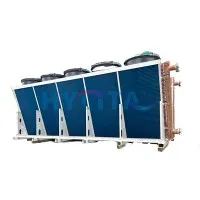
In the realm of industrial operations, boilers play a pivotal role in generating steam and heat for various processes. The efficiency and responsiveness of a boiler to load changes are crucial factors that can significantly impact the overall productivity and cost - effectiveness of an industrial facility. One key component that can enhance a boiler's response to load changes is the economiser. As a leading supplier of economisers for boilers, I am excited to delve into how an economiser can bring about these improvements.
Understanding the Basics of a Boiler and Load Changes
Before we explore the role of an economiser, it's essential to understand the concept of load changes in a boiler. A boiler's load refers to the amount of steam or heat it is required to produce at any given time. In industrial settings, the demand for steam can vary widely throughout the day. For example, during peak production hours, the load on the boiler may be at its maximum as more steam is needed to power machinery and processes. Conversely, during off - peak hours or maintenance periods, the load may drop significantly.
When a boiler experiences a sudden increase or decrease in load, it needs to adjust its operation quickly to meet the new demand. Failure to do so can lead to inefficiencies, such as over - or under - heating, which can waste energy and increase operating costs. Moreover, improper load management can also cause wear and tear on the boiler components, reducing their lifespan and increasing the frequency of maintenance and replacement.
How an Economiser Works
An economiser is a heat exchanger device installed in the boiler system. Its primary function is to recover heat from the flue gases leaving the boiler and transfer it to the feedwater entering the boiler. By pre - heating the feedwater, the economiser reduces the amount of fuel needed to raise the water temperature to the boiling point, thereby improving the overall efficiency of the boiler.
The heat recovery process in an economiser is based on the principle of heat transfer. The flue gases, which are typically at a high temperature, pass through the economiser tubes. Inside these tubes, the feedwater flows in the opposite direction (counter - flow arrangement), allowing for efficient heat transfer from the hot flue gases to the cooler feedwater. This pre - heating of the feedwater not only saves fuel but also reduces the thermal stress on the boiler tubes, as the water entering the boiler is already at a higher temperature.
Improving Boiler Response to Load Changes
Faster Startup and Shutdown
One of the ways an economiser improves a boiler's response to load changes is by enabling faster startup and shutdown times. When the boiler needs to be started up to meet an increased load, the pre - heated feedwater from the economiser allows the boiler to reach the desired operating temperature more quickly. This is because less energy is required to heat the water to the boiling point, reducing the time it takes for the boiler to generate steam.
Conversely, during shutdown, the economiser helps to cool down the boiler system more rapidly. The heat stored in the economiser can be dissipated more efficiently, allowing the boiler to be safely shut down in a shorter period. This ability to start up and shut down quickly is essential for industries that experience frequent load fluctuations, as it enables them to respond promptly to changes in steam demand.


Enhanced Load Following Capability
An economiser also enhances the boiler's load following capability. When the load on the boiler increases, the economiser can quickly adjust the amount of heat transferred to the feedwater. Since the feedwater is already pre - heated, the boiler can increase its steam production more rapidly without having to burn excessive amounts of fuel. This is particularly important in industries where the steam demand can change suddenly, such as in food processing plants or textile mills.
On the other hand, when the load decreases, the economiser can reduce the heat transfer rate. This helps to prevent over - heating of the boiler and ensures that the boiler operates at an optimal efficiency level. The ability to adjust the heat transfer rate in response to load changes is made possible by the design of the economiser, which allows for precise control of the flow of flue gases and feedwater.
Reducing Thermal Stress
Load changes can cause significant thermal stress on the boiler components. When the load increases, the sudden influx of cold feedwater can cause thermal shock to the boiler tubes, leading to cracking and other forms of damage. An economiser helps to mitigate this problem by pre - heating the feedwater. By reducing the temperature difference between the feedwater and the boiler tubes, the economiser minimizes the thermal stress on the tubes, allowing them to withstand load changes more effectively.
This reduction in thermal stress not only extends the lifespan of the boiler tubes but also improves the overall reliability of the boiler system. A more reliable boiler system is better able to respond to load changes without experiencing breakdowns or malfunctions, ensuring continuous operation and reducing downtime.
Types of Economisers and Their Impact on Load Response
Carbon Steel Economiser
Carbon steel economisers are a popular choice in many industrial applications. They are known for their durability and cost - effectiveness. Carbon steel has good heat transfer properties, which allow for efficient heat recovery from the flue gases. Carbon Steel Economiser can handle a wide range of operating conditions and are suitable for boilers with varying load requirements.
The robust construction of carbon steel economisers enables them to withstand the thermal and mechanical stresses associated with load changes. They can quickly adjust to changes in flue gas temperature and feedwater flow rate, ensuring that the boiler maintains its efficiency and responsiveness even during periods of high load fluctuations.
Heat Energy Recovery Economiser
Heat energy recovery economisers are designed to maximize the recovery of heat from the flue gases. These economisers are equipped with advanced heat transfer surfaces and control systems that optimize the heat transfer process. Heat Energy Recovery economisers can significantly improve the boiler's efficiency and its ability to respond to load changes.
By recovering more heat from the flue gases, the heat energy recovery economiser can pre - heat the feedwater to a higher temperature, reducing the energy required for steam generation. This allows the boiler to increase or decrease its steam production more rapidly, enhancing its load following capability.
Heat Exhaust Recovery Economiser
Heat exhaust recovery economisers focus on recovering heat from the exhaust gases at the end of the boiler process. These economisers are particularly useful in applications where the exhaust gases still contain a significant amount of heat energy. Heat Exhaust Recovery economisers can further improve the overall efficiency of the boiler system and its response to load changes.
The recovered heat can be used to pre - heat the feedwater or for other auxiliary processes, reducing the overall energy consumption of the facility. In addition, the heat exhaust recovery economiser can help to stabilize the boiler's operation during load changes by providing a consistent source of pre - heated feedwater.
Conclusion
In conclusion, an economiser is a vital component in a boiler system that can significantly improve the boiler's response to load changes. By pre - heating the feedwater, reducing startup and shutdown times, enhancing load following capability, and minimizing thermal stress, the economiser helps the boiler to operate more efficiently and reliably.
As a supplier of economisers for boilers, we understand the importance of providing high - quality products that meet the specific needs of our customers. Our economisers are designed and manufactured using the latest technologies and materials to ensure optimal performance and durability. Whether you are in the food processing, textile, or any other industry that relies on boilers, our economisers can help you improve your boiler's efficiency and responsiveness to load changes.
If you are interested in learning more about our economisers or would like to discuss your specific requirements, please feel free to contact us. We are committed to providing you with the best solutions for your boiler system and look forward to the opportunity to work with you.
References
- Smith, J. (2018). Boiler Efficiency and Performance. Elsevier.
- Jones, R. (2019). Heat Exchanger Design Handbook. McGraw - Hill.
- Brown, A. (2020). Industrial Boiler Operations. Wiley.