


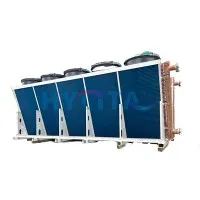
Heat energy recovery is a fascinating and crucial aspect of modern energy management. As a leading supplier in the field of [Heat Energy Recovery], I've witnessed firsthand its transformative impact on various industries. In this blog, I'll delve into how heat energy recovery works, its benefits, and why it's a smart investment for businesses.
The Basics of Heat Energy Recovery
At its core, heat energy recovery is the process of capturing and reusing waste heat that would otherwise be lost to the environment. This waste heat is generated during industrial processes, power generation, and even in everyday building operations. By recovering this heat, we can significantly reduce energy consumption, lower operating costs, and decrease greenhouse gas emissions.


The principle behind heat energy recovery is relatively simple. When a system produces heat, a portion of it is transferred to a heat exchanger. A heat exchanger is a device that allows heat to be transferred from one fluid (the hot fluid) to another (the cold fluid) without the two fluids coming into direct contact. This transfer of heat can be used for various purposes, such as preheating incoming fluids, generating steam, or providing space heating.
Types of Heat Energy Recovery Systems
There are several types of heat energy recovery systems, each designed to suit different applications and industries. Some of the most common types include:
Economiser Heat Exchanger
An Economiser Heat Exchanger is a type of heat exchanger that is commonly used in boilers. It is installed in the flue gas path of the boiler to recover heat from the exhaust gases before they are released into the atmosphere. The recovered heat is used to preheat the feedwater entering the boiler, which reduces the amount of fuel required to heat the water to the desired temperature. This not only improves the efficiency of the boiler but also reduces operating costs and emissions.
Heat Exhaust Recovery
Heat Exhaust Recovery systems are designed to capture and reuse heat from exhaust gases in industrial processes. These systems can be used in a variety of industries, including manufacturing, food processing, and chemical production. The recovered heat can be used for preheating air or water, generating steam, or powering other processes. By recovering this waste heat, businesses can reduce their energy consumption and operating costs while also improving their environmental performance.
Heat Recovery Ventilation (HRV)
Heat Recovery Ventilation (HRV) systems are commonly used in buildings to recover heat from the exhaust air and transfer it to the incoming fresh air. These systems are particularly useful in cold climates, where they can significantly reduce the energy required to heat the building. HRV systems work by passing the exhaust air and incoming fresh air through a heat exchanger, where the heat is transferred from the exhaust air to the fresh air. This preheated fresh air is then supplied to the building, reducing the load on the heating system.
How Heat Energy Recovery Works in Practice
Let's take a closer look at how heat energy recovery works in a real-world scenario. Consider a manufacturing plant that uses a boiler to generate steam for its production processes. The boiler produces hot exhaust gases that are typically released into the atmosphere. However, by installing an economiser heat exchanger, the plant can recover a significant amount of heat from these exhaust gases.
The economiser heat exchanger is installed in the flue gas path of the boiler. As the hot exhaust gases pass through the heat exchanger, they transfer their heat to the feedwater entering the boiler. This preheated feedwater is then fed into the boiler, reducing the amount of fuel required to heat the water to the desired temperature. The result is a more efficient boiler operation, lower fuel consumption, and reduced emissions.
In addition to the economiser heat exchanger, the plant may also install a heat exhaust recovery system to capture and reuse heat from other sources, such as industrial furnaces or ovens. The recovered heat can be used to preheat air or water, generate steam, or power other processes. By implementing these heat energy recovery systems, the plant can significantly reduce its energy consumption and operating costs while also improving its environmental performance.
Benefits of Heat Energy Recovery
There are numerous benefits to implementing a heat energy recovery system in your business. Some of the key benefits include:
Energy Savings
One of the primary benefits of heat energy recovery is the significant energy savings it can provide. By capturing and reusing waste heat, businesses can reduce their energy consumption and lower their operating costs. This is particularly important in industries where energy costs are a major expense, such as manufacturing, food processing, and chemical production.
Cost Savings
In addition to energy savings, heat energy recovery can also result in significant cost savings. By reducing energy consumption, businesses can lower their utility bills and save money on fuel costs. Additionally, heat energy recovery systems can often pay for themselves in a relatively short period of time through the savings they generate.
Environmental Benefits
Heat energy recovery also has significant environmental benefits. By reducing energy consumption, businesses can decrease their greenhouse gas emissions and contribute to a more sustainable future. This is particularly important in today's world, where climate change is a major concern.
Improved Process Efficiency
Heat energy recovery can also improve the efficiency of industrial processes. By preheating incoming fluids or providing heat for other processes, businesses can reduce the time and energy required to complete these processes. This can result in increased productivity and reduced production costs.
Why Choose Our Heat Energy Recovery Solutions
As a leading supplier of Heat Energy Recovery solutions, we offer a wide range of products and services to meet the needs of our customers. Our team of experts has extensive experience in designing, installing, and maintaining heat energy recovery systems, and we are committed to providing our customers with the highest quality products and services.
Some of the key reasons to choose our heat energy recovery solutions include:
Customized Solutions
We understand that every business is unique, and we offer customized heat energy recovery solutions to meet the specific needs of our customers. Our team of experts will work closely with you to understand your requirements and design a system that is tailored to your business.
High-Quality Products
We only use the highest quality materials and components in our heat energy recovery systems. This ensures that our systems are reliable, efficient, and long-lasting.
Expert Installation and Maintenance
Our team of experts has extensive experience in installing and maintaining heat energy recovery systems. We will ensure that your system is installed correctly and that it operates at peak efficiency. Additionally, we offer ongoing maintenance and support services to ensure that your system continues to perform at its best.
Competitive Pricing
We offer competitive pricing on all of our heat energy recovery solutions. We believe that heat energy recovery should be accessible to businesses of all sizes, and we are committed to providing our customers with the best value for their money.
Conclusion
Heat energy recovery is a smart investment for businesses looking to reduce their energy consumption, lower their operating costs, and improve their environmental performance. By capturing and reusing waste heat, businesses can significantly reduce their energy consumption and contribute to a more sustainable future.
If you're interested in learning more about our heat energy recovery solutions or would like to discuss your specific requirements, please don't hesitate to contact us. Our team of experts will be happy to answer your questions and provide you with a customized solution for your business. Let's work together to make your business more energy-efficient and sustainable.
References
- Cengel, Y. A., & Boles, M. A. (2015). Thermodynamics: An Engineering Approach. McGraw-Hill Education.
- Incropera, F. P., DeWitt, D. P., Bergman, T. L., & Lavine, A. S. (2017). Fundamentals of Heat and Mass Transfer. John Wiley & Sons.
- ASHRAE Handbook. (2017). HVAC Systems and Equipment. American Society of Heating, Refrigerating and Air-Conditioning Engineers.