


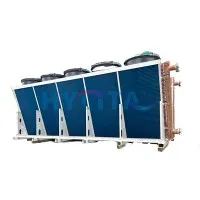
As a supplier of economisers in boilers, I've witnessed firsthand the numerous benefits these devices bring to boiler systems. Economisers are crucial components that enhance efficiency by pre - heating the feedwater using the waste heat from the boiler flue gases. This process reduces fuel consumption and increases overall energy efficiency. However, it's important to also shed light on the disadvantages that come with using an economiser in a boiler. Understanding these drawbacks can help potential customers make informed decisions when considering the installation of an economiser.
1. High Initial Investment
One of the most significant disadvantages of an economiser is the high initial cost. The design, manufacturing, and installation of an economiser require a substantial financial outlay. High - quality materials are needed to withstand the high - temperature and corrosive environment of the boiler flue gases. For example, stainless steel or other corrosion - resistant alloys are often used for the tubes and headers. These materials are expensive, and the fabrication process to create a well - designed economiser is complex, involving precise engineering and welding techniques.


Moreover, the installation of an economiser may require modifications to the existing boiler system. This could involve changes to the flue gas ductwork, feedwater piping, and control systems. The cost of these modifications, along with the labor required for installation, can add up quickly. This high initial investment can be a deterrent for small - and medium - sized enterprises that may not have the capital to spare. Even for larger companies, the long payback period associated with recouping the investment can be a concern.
2. Space Requirements
Economisers can take up a significant amount of space within a boiler room. They need to be installed in the path of the flue gases, which often requires dedicated floor space or vertical space within the boiler stack. This can be a challenge for facilities with limited space. In some cases, the need to accommodate an economiser may force a company to redesign its boiler room layout, which can be both time - consuming and costly.
For example, in a retrofit situation where an existing boiler system is being upgraded with an economiser, finding enough space can be particularly difficult. The boiler room may already be crowded with other equipment such as pumps, valves, and storage tanks. The addition of an economiser may require the relocation of some of this equipment, or even the construction of an extension to the boiler room. This not only adds to the cost but also disrupts the normal operation of the facility during the installation process.
3. Maintenance and Cleaning
Regular maintenance is essential for the proper functioning of an economiser. Over time, the tubes of the economiser can accumulate deposits such as soot, ash, and scale. These deposits act as insulators, reducing the heat transfer efficiency between the flue gases and the feedwater. As a result, the economiser may not be able to pre - heat the feedwater as effectively, leading to a decrease in overall boiler efficiency.
Cleaning the economiser tubes can be a labor - intensive and time - consuming process. It often requires specialized equipment and trained personnel. For example, high - pressure water jetting or mechanical brushing may be used to remove the deposits from the tubes. In addition, the internal components of the economiser, such as the headers and baffles, also need to be inspected regularly for signs of wear and corrosion. Any damaged components need to be replaced promptly to prevent further problems.
The frequency of maintenance depends on the operating conditions of the boiler. In facilities where the boiler burns low - quality fuels or operates in a dirty environment, the economiser may need to be cleaned more frequently. This regular maintenance not only adds to the operating costs but also requires the boiler to be taken out of service for a period of time, which can disrupt production.
4. Corrosion and Erosion
The environment inside an economiser is highly corrosive and erosive. The flue gases contain various acidic components such as sulfur dioxide and nitrogen oxides, which can react with water vapor in the gases to form acids. These acids can corrode the tubes and other components of the economiser over time. In addition, the high - velocity flue gases can carry abrasive particles such as fly ash, which can cause erosion of the economiser surfaces.
Corrosion and erosion can lead to tube leaks, which can be a serious problem. A tube leak can result in a loss of feedwater, reduced boiler efficiency, and even damage to other components of the boiler system. Repairing or replacing corroded or eroded tubes can be expensive and time - consuming. Special coatings and materials can be used to mitigate corrosion and erosion, but these also add to the cost of the economiser.
5. Impact on Flue Gas Flow
The installation of an economiser can have an impact on the flow of flue gases through the boiler system. The economiser creates additional resistance to the flow of flue gases, which can increase the backpressure in the flue gas ductwork. This increased backpressure can cause problems for the boiler's draft system.
If the draft system is not properly sized or designed to handle the additional resistance, it can lead to poor combustion in the boiler. The reduced flow of air into the combustion chamber can result in incomplete combustion, which can lead to increased emissions of pollutants such as carbon monoxide and unburned hydrocarbons. In addition, the increased backpressure can also cause the boiler to operate less efficiently, as the fan or blower used to move the flue gases may have to work harder, consuming more energy.
6. Limited Applicability in Some Boiler Types
Economisers may not be suitable for all types of boilers. For example, in some high - pressure and high - temperature boilers, the feedwater temperature may already be close to the saturation temperature. In such cases, the potential for pre - heating the feedwater using an economiser is limited. The additional heat transfer provided by the economiser may not result in a significant improvement in boiler efficiency.
In addition, some boilers that operate with very low flue gas temperatures may not have enough waste heat available to make an economiser cost - effective. For example, in boilers that use advanced combustion technologies to achieve high combustion efficiency, the flue gas temperatures may be relatively low. In these cases, the amount of heat that can be recovered by an economiser may be too small to justify the investment.
7. Complexity of Operation and Control
Economisers require a certain level of technical expertise to operate and control effectively. The feedwater flow rate, flue gas temperature, and other parameters need to be carefully monitored and adjusted to ensure optimal performance. This requires a sophisticated control system that can respond to changes in operating conditions.
For example, if the feedwater flow rate is too high, the economiser may not be able to transfer enough heat to the water, resulting in inefficient operation. On the other hand, if the flow rate is too low, the tubes of the economiser may overheat, leading to damage. The control system also needs to be able to adjust for changes in the flue gas temperature and composition, which can vary depending on factors such as the type of fuel being burned and the load on the boiler.
The complexity of operating and controlling an economiser can be a challenge for operators who may not have the necessary training or experience. This can lead to sub - optimal performance and increased maintenance requirements.
Despite these disadvantages, economisers still offer significant benefits in terms of energy savings and environmental performance. At [our company], we understand the challenges associated with using economisers in boilers, and we are committed to providing our customers with the best solutions. Our economisers are designed to minimize these disadvantages through advanced design, high - quality materials, and efficient installation processes.
If you are considering the installation of an economiser in your boiler system, we encourage you to contact us for a detailed consultation. We can help you evaluate whether an economiser is the right choice for your specific needs, and provide you with a customized solution that takes into account your budget, space constraints, and operating requirements. You can learn more about our economisers and their associated technologies by visiting the following links: Heat Energy Recovery, Heat Exhaust Recovery, and Economiser Heat Exchanger.
References
- Steam: Its Generation and Use. Babcock & Wilcox Company.
- Boiler Efficiency and Combustion. ASME International.
- Handbook of Heat Exchanger Design. McGraw - Hill.