


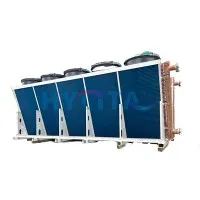
Hey there! I'm a supplier of Heat Exhaust Recovery systems, and I've seen firsthand the potential of this technology to save energy and cut costs for small - scale industries. But let me tell you, implementing heat exhaust recovery in these industries isn't all sunshine and rainbows. There are quite a few challenges that we need to talk about.
High Initial Investment
One of the biggest hurdles for small - scale industries when it comes to heat exhaust recovery is the high initial investment. You see, setting up a heat exhaust recovery system requires purchasing specialized equipment like Heat Exhaust Recovery units, heat exchangers, and control systems. For a small business, this can be a huge financial burden.
Most small - scale industries operate on tight budgets, and coming up with the funds for a new heat recovery system can be next to impossible. They're often more focused on day - to - day operations and keeping the business afloat than on long - term energy savings. And let's face it, convincing them that the upfront cost will pay off in the long run can be an uphill battle.
Lack of Technical Knowledge
Another challenge is the lack of technical knowledge among small - scale industry operators. Many of these businesses don't have in - house engineering or technical teams to understand the ins and outs of heat exhaust recovery systems. They might not know how to properly size the equipment, install it, or maintain it.
For example, sizing a Heat Energy Recovery system correctly is crucial. If it's too small, it won't recover enough heat, and if it's too big, it'll be a waste of money. Without the right technical know - how, small - scale industries might end up with a system that doesn't work as efficiently as it should.
Moreover, installation and maintenance of these systems require specific skills. A poorly installed system can lead to leaks, reduced efficiency, and even safety hazards. And since small - scale industries often can't afford to hire full - time technicians, they might struggle to keep the system in good working condition.
Space Constraints
Small - scale industries usually have limited space. Factories and workshops are often crowded with machinery, raw materials, and finished products. Finding enough space to install a heat exhaust recovery system can be a real headache.
Take an Economiser Heat Exchanger for example. These can be quite large, especially if they're designed to handle high - volume exhaust streams. And they need to be installed in a location where they can effectively capture the heat from the exhaust. But in a cramped factory, there might not be a suitable spot.
Even if there is some space available, it might not be in the most ideal location. This could mean longer ductwork, which can increase heat losses and reduce the overall efficiency of the system.
Regulatory and Permitting Issues
Navigating the regulatory and permitting process is yet another challenge. Different regions have different rules and regulations regarding the installation and operation of heat exhaust recovery systems. Small - scale industries might not be aware of these requirements or might not have the time and resources to deal with the paperwork.
For instance, some areas require environmental impact assessments before a new system can be installed. This can involve hiring consultants, conducting studies, and submitting detailed reports. All of this takes time and money, which small - scale industries might not have.
And once the system is installed, there are often ongoing reporting and compliance requirements. Failure to comply with these regulations can result in fines and other penalties, which can be a major setback for a small business.
Uncertainty about Energy Savings
Small - scale industries are understandably cautious when it comes to investing in new technology. They want to know exactly how much money they'll save on energy costs by implementing a heat exhaust recovery system. But predicting energy savings accurately can be difficult.
There are many factors that can affect the performance of a heat recovery system, such as the type of industry, the operating conditions, and the quality of the equipment. For example, a food processing plant might have different exhaust characteristics than a metalworking shop. This means that the energy savings can vary widely from one business to another.


Without clear and reliable data on energy savings, small - scale industries might be hesitant to take the plunge and invest in a heat exhaust recovery system.
Compatibility with Existing Systems
Integrating a heat exhaust recovery system with existing industrial processes can be a challenge. Many small - scale industries have older equipment and systems that were not designed to work with heat recovery technology.
For example, the exhaust flow rate and temperature from an old boiler might not be compatible with a new heat exchanger. This could require modifications to the existing equipment, which can be costly and time - consuming.
Also, the control systems of the heat recovery system need to be able to communicate effectively with the rest of the industrial system. If there are compatibility issues, it can lead to operational problems and reduced efficiency.
Maintenance and Downtime
Maintenance is a critical aspect of any heat exhaust recovery system. Regular maintenance ensures that the system operates at peak efficiency and has a long lifespan. However, small - scale industries often struggle with maintenance due to limited resources.
Performing maintenance tasks like cleaning heat exchangers, checking for leaks, and replacing worn - out parts can be time - consuming. And when the system is down for maintenance, it means that the production process has to stop. For small - scale industries, any downtime can result in lost revenue.
They might also be reluctant to invest in maintenance because it's an additional cost. But neglecting maintenance can lead to more serious problems down the line, such as equipment failure, which can be even more expensive to fix.
Conclusion
Despite these challenges, the potential benefits of heat exhaust recovery in small - scale industries are significant. Energy savings, reduced operating costs, and a smaller environmental footprint are all compelling reasons to invest in this technology.
As a Heat Exhaust Recovery supplier, I'm committed to helping small - scale industries overcome these challenges. We offer customized solutions that take into account the specific needs and constraints of each business. We provide training and support to ensure that the systems are installed and maintained correctly.
If you're a small - scale industry owner and you're interested in learning more about how heat exhaust recovery can benefit your business, I encourage you to reach out. Let's have a chat about your energy needs, your budget, and how we can work together to implement a cost - effective heat exhaust recovery solution. Don't let these challenges hold you back from realizing the energy - saving potential of your business.
References
- DOE. (2023). Energy Efficiency Guide for Small - Scale Industries.
- IEA. (2022). Heat Recovery in Industrial Processes: Best Practices.
- EPA. (2023). Regulations for Industrial Energy Recovery Systems.