


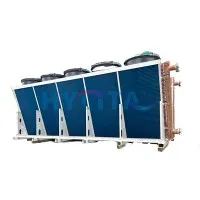
Hey there! As a supplier of Heat Exhaust Recovery systems, I've been in the thick of it, dealing with all sorts of questions about these systems. One of the most common queries I get is about the performance indicators for heat exhaust recovery systems. So, I thought I'd take a deep dive into this topic and share some insights with you.


Why Heat Exhaust Recovery Matters
Before we jump into the performance indicators, let's quickly talk about why heat exhaust recovery is so important. In many industrial processes, a significant amount of heat is wasted through exhaust gases. This not only leads to higher energy costs but also contributes to environmental pollution. Heat exhaust recovery systems, like the ones we supply at [Supplier's Company], are designed to capture this wasted heat and reuse it, which can result in substantial energy savings and a reduced carbon footprint.
Key Performance Indicators
1. Heat Recovery Efficiency
Heat recovery efficiency is probably the most crucial performance indicator for a heat exhaust recovery system. It measures how effectively the system can capture and transfer the heat from the exhaust gases to the working fluid (usually water or air). A higher efficiency means more heat is being recovered, which translates to greater energy savings.
The formula for heat recovery efficiency is:
[
\text{Heat Recovery Efficiency} = \frac{\text{Heat recovered}}{\text{Total heat available in exhaust gases}} \times 100%
]
For example, if a system recovers 80% of the heat available in the exhaust gases, it has a heat recovery efficiency of 80%. At [Supplier's Company], we strive to design our systems with high heat recovery efficiencies to ensure maximum energy savings for our customers. You can learn more about heat energy recovery on our website Heat Energy Recovery.
2. Temperature Difference
The temperature difference between the inlet and outlet of the exhaust gases and the working fluid is another important performance indicator. A larger temperature difference indicates that more heat is being transferred from the exhaust gases to the working fluid.
For instance, if the exhaust gases enter the heat recovery system at 300°C and leave at 100°C, while the working fluid enters at 50°C and leaves at 200°C, there is a significant temperature difference, which means the system is effectively transferring heat. However, it's important to note that the temperature difference should be within the design limits of the system to ensure its safe and efficient operation.
3. Pressure Drop
Pressure drop refers to the decrease in pressure of the exhaust gases as they pass through the heat recovery system. A high pressure drop can increase the energy consumption of the exhaust fans or blowers, which can offset the energy savings achieved through heat recovery.
Therefore, it's essential to design the heat recovery system with a low pressure drop. At [Supplier's Company], we use advanced engineering techniques to minimize the pressure drop in our systems, ensuring that they operate efficiently without increasing the energy consumption of the exhaust system.
4. Payback Period
The payback period is the time it takes for the energy savings achieved through heat recovery to equal the initial investment in the system. A shorter payback period indicates a more cost-effective system.
When calculating the payback period, you need to consider factors such as the initial cost of the system, the energy savings per year, and the maintenance costs. At [Supplier's Company], we work closely with our customers to provide them with accurate payback period calculations based on their specific requirements. This helps them make informed decisions about investing in our heat exhaust recovery systems.
5. Environmental Impact
In today's world, environmental impact is an important consideration for any industrial process. A heat exhaust recovery system can significantly reduce the carbon emissions associated with energy consumption by recovering and reusing wasted heat.
By using our heat exhaust recovery systems, our customers can contribute to a more sustainable future while also saving on energy costs. You can learn more about our commitment to environmental sustainability on our website Heat Exhaust Recovery.
Factors Affecting Performance
Several factors can affect the performance of a heat exhaust recovery system. These include:
- Exhaust Gas Composition: The composition of the exhaust gases can affect the heat transfer rate and the corrosion resistance of the system. For example, exhaust gases containing high levels of sulfur or chlorine can cause corrosion in the heat exchanger, which can reduce its efficiency and lifespan.
- Operating Conditions: The operating conditions, such as the temperature, pressure, and flow rate of the exhaust gases and the working fluid, can also affect the performance of the system. It's important to ensure that the system is designed to operate within the specified operating conditions to achieve optimal performance.
- Maintenance: Regular maintenance is essential to ensure the long-term performance of a heat exhaust recovery system. This includes cleaning the heat exchanger, checking for leaks, and replacing worn-out components. At [Supplier's Company], we provide comprehensive maintenance services to our customers to ensure that their systems operate at peak performance.
Our Solutions
At [Supplier's Company], we offer a wide range of heat exhaust recovery systems, including Carbon Steel Economiser, which are designed to meet the specific needs of our customers. Our systems are engineered to provide high heat recovery efficiency, low pressure drop, and a short payback period.
We also offer customized solutions based on the unique requirements of each customer. Our team of experienced engineers will work closely with you to understand your needs and design a system that is tailored to your specific application.
Contact Us for a Quote
If you're interested in learning more about our heat exhaust recovery systems or would like to get a quote, please don't hesitate to contact us. We'd be happy to discuss your requirements and provide you with a customized solution that meets your needs and budget.
Investing in a heat exhaust recovery system is a smart decision that can help you save on energy costs, reduce your carbon footprint, and improve the efficiency of your industrial processes. So, why wait? Contact us today and take the first step towards a more sustainable and cost-effective future.
References
- "Heat Exchanger Design Handbook", by Hewitt, G. F., Shires, G. L., & Bott, T. R.
- "Energy Efficiency in Industrial Processes", by International Energy Agency.
- "Thermal Engineering", by P. K. Nag.