


The efficiency of a boiler is a critical factor in various industrial and commercial applications, directly influencing energy consumption, operational costs, and environmental impact. At partial load, boilers often face challenges in maintaining high efficiency. An economizer in a boiler plays a significant role in addressing these challenges. As a leading supplier of economizers for boilers, I will delve into the impact of an economizer on boiler efficiency at partial load.
Understanding Boiler Operation at Partial Load
Boilers rarely operate at full capacity throughout their service life. In many real - world scenarios, they run at partial load due to varying demand for steam or hot water. When a boiler operates at partial load, several factors can lead to a decrease in efficiency.
For instance, the heat transfer rate in the boiler tubes may not be optimized. At lower loads, the flow rate of the working fluid (water or steam) is reduced, which can result in less effective heat transfer. Additionally, the combustion process may become less efficient. The burner may not operate at its optimal air - fuel ratio, leading to incomplete combustion and wasted fuel. There is also an increased risk of heat losses through the boiler's walls and flue gases, as the reduced load means that the boiler has a relatively larger surface area exposed to the environment compared to the heat output.
How an Economizer Works
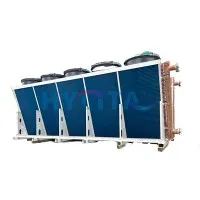
An economizer is a heat exchanger device installed in the boiler system. Its primary function is to recover heat from the flue gases leaving the boiler and transfer this heat to the feedwater entering the boiler. By pre - heating the feedwater, the economizer reduces the amount of fuel required to raise the water to the boiling point, thereby increasing the overall efficiency of the boiler.
The economizer consists of a series of tubes through which the feedwater flows. The hot flue gases pass over these tubes, transferring heat to the water. This heat recovery process not only saves energy but also reduces the temperature of the flue gases exiting the boiler, which is beneficial from an environmental perspective as it decreases the emission of hot, potentially polluting gases.
Impact of an Economizer on Boiler Efficiency at Partial Load
1. Improved Heat Transfer
At partial load, the reduced flow rate of the working fluid in the boiler can impede heat transfer. However, an economizer can help counteract this effect. By pre - heating the feedwater, the temperature difference between the flue gases and the water in the economizer tubes is maintained at a relatively high level. This allows for efficient heat transfer even when the boiler is operating at a lower capacity.
For example, consider a boiler without an economizer. At partial load, the feedwater enters the boiler at a relatively low temperature, and the heat transfer rate from the flue gases to the water in the boiler tubes is limited. With an economizer, the feedwater is pre - heated, and when it enters the boiler, it can absorb heat more effectively from the combustion process, improving the overall heat transfer efficiency of the boiler system.
2. Optimized Combustion
An economizer can also contribute to more efficient combustion at partial load. When the feedwater is pre - heated, the boiler requires less fuel to generate the same amount of steam or hot water. This means that the burner can operate closer to its optimal air - fuel ratio. At partial load, without an economizer, the burner may have to adjust to a wider range of operating conditions, which can lead to sub - optimal combustion.
By reducing the fuel demand through feedwater pre - heating, the economizer helps the burner maintain a more stable and efficient combustion process. This results in less unburned fuel in the flue gases and lower emissions of pollutants such as carbon monoxide and nitrogen oxides.
3. Reduced Heat Losses
As mentioned earlier, heat losses through the boiler's walls and flue gases are a concern at partial load. An economizer helps to reduce these losses. By recovering heat from the flue gases, the temperature of the flue gases leaving the boiler is significantly reduced. This not only saves energy but also reduces the heat radiated from the flue stack to the environment.
Moreover, pre - heating the feedwater means that the boiler has to generate less heat overall. This reduces the temperature of the boiler's walls, resulting in lower heat losses through conduction and radiation.
Types of Economizers and Their Impact at Partial Load
Carbon Steel Economiser
A Carbon Steel Economiser is a popular choice in many boiler applications. Carbon steel has good heat transfer properties and is relatively inexpensive compared to other materials. At partial load, a carbon steel economizer can effectively recover heat from the flue gases and pre - heat the feedwater.
The robustness of carbon steel allows it to withstand the varying operating conditions at partial load. It can handle the reduced flow rates and lower temperatures of the flue gases without significant degradation in performance. Additionally, carbon steel economizers are easy to install and maintain, making them a practical option for improving boiler efficiency at partial load.
Heat Exhaust Recovery
Heat Exhaust Recovery economizers are designed specifically to capture the heat from the exhaust gases of the boiler. At partial load, these economizers can be particularly effective in recovering the heat that would otherwise be wasted.
They are often equipped with advanced heat transfer surfaces, such as finned tubes, which increase the surface area available for heat transfer. This allows for more efficient heat recovery even when the flow rate of the exhaust gases is reduced at partial load. Heat exhaust recovery economizers can also be integrated with other heat recovery systems in the boiler plant, further enhancing the overall energy efficiency.
Heat Energy Recovery
Heat Energy Recovery economizers focus on maximizing the recovery of heat energy from the boiler system. At partial load, they can adapt to the changing operating conditions and still achieve high levels of heat recovery.
These economizers may use advanced control systems to adjust the heat transfer process based on the load of the boiler. For example, they can regulate the flow rate of the feedwater through the economizer tubes to ensure optimal heat transfer at all times. This adaptability makes heat energy recovery economizers a valuable asset in improving boiler efficiency at partial load.


Benefits of Installing an Economizer at Partial Load
- Energy Savings: By improving the efficiency of the boiler at partial load, an economizer reduces the amount of fuel consumed. This leads to significant cost savings over time, especially in applications where the boiler operates at partial load for a large portion of its service life.
- Environmental Benefits: The reduced fuel consumption means lower emissions of greenhouse gases and pollutants. This helps industries meet environmental regulations and contribute to a more sustainable future.
- Extended Boiler Lifespan: Since the economizer reduces the stress on the boiler by pre - heating the feedwater, it can help extend the lifespan of the boiler. At partial load, the boiler is already operating under sub - optimal conditions, and an economizer can mitigate some of the negative effects, reducing wear and tear on the boiler components.
Conclusion
In conclusion, an economizer has a profound impact on the efficiency of a boiler at partial load. It improves heat transfer, optimizes combustion, and reduces heat losses, leading to significant energy savings, environmental benefits, and extended boiler lifespan.
As a supplier of economizers for boilers, we understand the importance of providing high - quality products that can enhance the performance of boilers at all load conditions, especially at partial load. Our range of Carbon Steel Economiser, Heat Exhaust Recovery, and Heat Energy Recovery economizers are designed to meet the diverse needs of our customers.
If you are looking to improve the efficiency of your boiler at partial load, we invite you to contact us for a consultation. Our team of experts can help you select the most suitable economizer for your specific application and provide you with all the necessary support for installation and maintenance.
References
- ASME Boiler and Pressure Vessel Code. American Society of Mechanical Engineers.
- Steam: Its Generation and Use. Babcock & Wilcox Company.
- Heat Exchanger Design Handbook. Begell House.