


Do oil coolers need a thermostat? This is a question that often comes up in the industrial and automotive sectors. As an oil cooler supplier, I've encountered this query numerous times from clients looking to optimize their cooling systems. In this blog, we'll explore the necessity of a thermostat for oil coolers, delving into the science behind it and the practical implications for various applications.
The Basics of Oil Coolers
Before we discuss the role of a thermostat, let's briefly understand what oil coolers are and how they work. Oil coolers are heat exchangers designed to lower the temperature of oil in a system. They are commonly used in engines, transmissions, hydraulic systems, and other machinery where oil is used for lubrication and heat transfer.
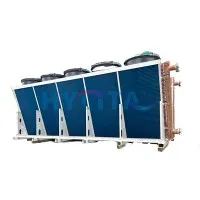
There are different types of oil coolers available, each with its own advantages and applications. For instance, Finned Oil Cooler is a popular choice due to its high surface area, which allows for efficient heat dissipation. The fins increase the contact area between the oil and the surrounding air, enhancing the cooling process.
Another type is the Oil-cooled Industrial Cooler, which uses oil as the cooling medium. This type of cooler is often used in industrial settings where large amounts of heat need to be removed from the system.
Water-cooled Industrial Cooler is also a common option. It uses water as the cooling medium, which can provide more efficient cooling compared to air-cooled systems, especially in high-temperature environments.
The Role of a Thermostat in Oil Coolers
A thermostat is a device that regulates the temperature of a system by controlling the flow of a fluid. In the context of oil coolers, a thermostat can be used to control the flow of oil through the cooler.
The main function of a thermostat in an oil cooler is to ensure that the oil temperature remains within a specific range. When the oil temperature is too low, the thermostat restricts the flow of oil through the cooler, allowing the oil to warm up. Conversely, when the oil temperature is too high, the thermostat opens up, allowing more oil to flow through the cooler and reducing the temperature.
This temperature regulation is crucial for several reasons. Firstly, maintaining the optimal oil temperature is essential for the proper functioning of the machinery. If the oil is too cold, it can become viscous, which can lead to increased friction and wear on the moving parts. On the other hand, if the oil is too hot, it can break down, losing its lubricating properties and potentially causing damage to the system.
Secondly, a thermostat can help improve the efficiency of the cooling system. By controlling the flow of oil through the cooler, the thermostat ensures that the cooler is only working when necessary. This can reduce energy consumption and extend the lifespan of the cooler.
When a Thermostat is Necessary
In some applications, a thermostat is absolutely necessary for the proper functioning of the oil cooler. For example, in automotive engines, the oil temperature needs to be carefully regulated to ensure optimal performance and longevity. A thermostat in the oil cooler helps maintain the oil at the right temperature, especially during cold starts and high-speed driving.
In industrial applications, such as hydraulic systems, a thermostat can also be crucial. Hydraulic systems rely on oil for lubrication and power transmission, and maintaining the correct oil temperature is essential for their efficient operation. A thermostat in the oil cooler can help prevent overheating and ensure that the hydraulic system operates smoothly.


When a Thermostat May Not Be Necessary
However, there are also situations where a thermostat may not be necessary. In some small-scale applications or systems with a relatively stable operating temperature, the oil cooler may be able to maintain the oil temperature without the need for a thermostat.
For example, in a simple air-cooled oil cooler used in a small generator, the ambient temperature may be relatively constant, and the cooler may be able to dissipate the heat effectively without the need for a thermostat. In such cases, adding a thermostat may add unnecessary complexity and cost to the system.
Factors to Consider When Deciding on a Thermostat
When deciding whether to use a thermostat in an oil cooler, several factors need to be considered. These include:
- Operating temperature range: If the system operates over a wide temperature range, a thermostat may be necessary to ensure that the oil temperature remains within the optimal range.
- System complexity: In more complex systems, such as large industrial machinery or high-performance engines, a thermostat can help maintain the stability and efficiency of the system.
- Cost: Adding a thermostat to an oil cooler will increase the cost of the system. Therefore, it's important to weigh the benefits of temperature regulation against the additional cost.
Conclusion
In conclusion, whether an oil cooler needs a thermostat depends on the specific application and requirements of the system. While a thermostat can provide significant benefits in terms of temperature regulation and system efficiency, it may not be necessary in all cases.
As an oil cooler supplier, we understand the importance of providing the right solution for our clients. We offer a wide range of oil coolers, including those with and without thermostats, to meet the diverse needs of our customers. If you're unsure whether a thermostat is necessary for your oil cooler, our team of experts is here to help. We can provide you with detailed information and advice based on your specific requirements.
If you're interested in purchasing oil coolers or have any questions about our products, please feel free to contact us. We look forward to working with you to find the best cooling solution for your needs.
References
- "Heat Exchangers: Selection, Rating, and Thermal Design" by Sadik Kakac and Hongtan Liu.
- "Automotive Engine Design" by Richard Stone.
- "Hydraulic Systems and Fluid Power" by Paul A. Cooper.