


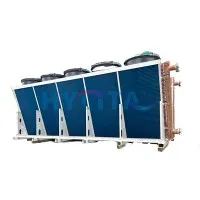
Scaling in economizer tubes is a common and vexing problem that can significantly reduce the efficiency and lifespan of these crucial components. As a trusted Economizer Tube supplier, I've witnessed firsthand the detrimental effects of scaling on industrial operations. In this blog, I'll share some effective strategies to prevent scaling in economizer tubes, ensuring optimal performance and longevity.
Understanding Scaling in Economizer Tubes
Before delving into prevention methods, it's essential to understand what causes scaling in economizer tubes. Scaling occurs when dissolved minerals in the water, such as calcium, magnesium, and silica, precipitate out of the solution and form a hard, adherent layer on the tube surfaces. This layer acts as an insulator, reducing heat transfer efficiency and increasing energy consumption. Over time, severe scaling can lead to tube blockages, corrosion, and even system failure.
Several factors contribute to scaling in economizer tubes, including water quality, operating conditions, and tube material. Poor water quality with high mineral content is the primary culprit, but factors like high temperatures, low flow rates, and improper chemical treatment can also exacerbate the problem.
Strategies for Preventing Scaling
1. Water Treatment
One of the most effective ways to prevent scaling in economizer tubes is through proper water treatment. This involves removing or reducing the concentration of scale-forming minerals in the water before it enters the economizer. There are several water treatment methods available, each with its own advantages and limitations.
- Softening: Water softening is a common method used to remove calcium and magnesium ions from the water. This is typically achieved through ion exchange, where the hard water is passed through a resin bed that exchanges the calcium and magnesium ions for sodium ions. Softened water has a lower tendency to form scale, but it may still contain other minerals that can contribute to scaling.
- Reverse Osmosis (RO): Reverse osmosis is a more advanced water treatment method that can remove a wide range of dissolved solids, including scale-forming minerals, from the water. In RO, water is forced through a semi-permeable membrane under pressure, leaving behind the dissolved solids. RO-treated water has a very low mineral content, making it ideal for use in economizers.
- Chemical Treatment: Chemical treatment involves adding chemicals to the water to prevent the precipitation of scale-forming minerals. These chemicals can include anti-scalants, dispersants, and pH adjusters. Anti-scalants work by inhibiting the growth and aggregation of scale crystals, while dispersants help to keep the scale particles in suspension, preventing them from adhering to the tube surfaces. pH adjusters can also be used to control the water chemistry and prevent the formation of scale.
2. Operating Conditions Optimization
In addition to water treatment, optimizing the operating conditions of the economizer can also help to prevent scaling. This includes maintaining proper flow rates, temperatures, and pressures.
- Flow Rate: Maintaining a sufficient flow rate through the economizer tubes is crucial for preventing scaling. A low flow rate can lead to stagnant water conditions, which can increase the likelihood of scale formation. By ensuring that the water is flowing at a high enough velocity, the scale particles are less likely to settle on the tube surfaces.
- Temperature: Controlling the temperature of the water in the economizer is also important. High temperatures can increase the solubility of scale-forming minerals, but they can also promote the precipitation of these minerals if the water is supersaturated. By maintaining the water temperature within a certain range, the risk of scaling can be minimized.
- Pressure: Proper pressure control is essential for preventing scaling in economizer tubes. High pressures can cause the water to boil, which can lead to the formation of steam bubbles and the precipitation of scale-forming minerals. By maintaining the pressure within the recommended range, the risk of boiling and scaling can be reduced.
3. Tube Material Selection
The choice of tube material can also have a significant impact on the prevention of scaling in economizer tubes. Some materials are more resistant to scaling than others, and selecting the right material for the specific application can help to minimize the risk of scaling.
- Stainless Steel: Stainless steel is a popular choice for economizer tubes due to its excellent corrosion resistance and high strength. It is also relatively resistant to scaling, especially when compared to other materials such as carbon steel. However, stainless steel can still be susceptible to scaling under certain conditions, such as high temperatures and high mineral content in the water.
- Titanium: Titanium is another material that is highly resistant to scaling and corrosion. It has a very low coefficient of thermal expansion, which makes it less prone to thermal stress and cracking. Titanium is also biocompatible, which makes it suitable for use in applications where water quality is a concern. However, titanium is more expensive than stainless steel, which may limit its use in some applications.
- Copper-Nickel Alloys: Copper-nickel alloys are also known for their excellent corrosion resistance and scaling resistance. They are commonly used in marine applications and in heat exchangers where the water contains high levels of chloride ions. Copper-nickel alloys are also relatively easy to fabricate and weld, which makes them a popular choice for economizer tubes.
4. Regular Maintenance and Inspection
Regular maintenance and inspection of the economizer tubes are essential for preventing scaling and ensuring optimal performance. This includes cleaning the tubes periodically to remove any accumulated scale, as well as inspecting the tubes for signs of corrosion, erosion, or other damage.
- Cleaning: There are several methods available for cleaning economizer tubes, including mechanical cleaning, chemical cleaning, and ultrasonic cleaning. Mechanical cleaning involves using brushes, scrapers, or high-pressure water jets to remove the scale from the tube surfaces. Chemical cleaning involves using chemicals to dissolve the scale, while ultrasonic cleaning uses high-frequency sound waves to loosen and remove the scale particles.
- Inspection: Regular inspection of the economizer tubes is important for detecting any signs of scaling, corrosion, or other damage. This can be done using non-destructive testing methods such as ultrasonic testing, radiography, and eddy current testing. By detecting and addressing any issues early on, the risk of tube failure and system downtime can be minimized.
Conclusion
Preventing scaling in economizer tubes is essential for ensuring the efficient and reliable operation of industrial processes. By implementing the strategies outlined in this blog, including water treatment, operating conditions optimization, tube material selection, and regular maintenance and inspection, the risk of scaling can be significantly reduced. As an Economizer Tube supplier, I'm committed to providing high-quality products and solutions that help our customers prevent scaling and maximize the performance of their economizers.


If you're interested in learning more about our Economizer Tubes or need help with preventing scaling in your economizer system, please don't hesitate to contact us for a consultation. We'd be happy to discuss your specific needs and provide you with the best solutions for your application.
References
- Waste Heat Recovery
- Exhaust Gas Heat Exchanger
- SS Economiser Heat Exchanger
- Smith, J. (2018). "Prevention of Scaling in Heat Exchangers." Journal of Heat Transfer, 140(6), 061001.
- Jones, R. (2019). "Water Treatment for Industrial Boilers and Heat Exchangers." Chemical Engineering Progress, 115(3), 42-48.
- Brown, S. (2020). "Material Selection for Economizer Tubes." Materials Science and Engineering, 750, 133012.