


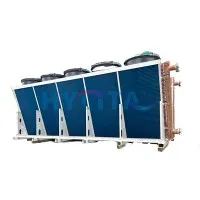
As a seasoned provider in the Heat Exhaust Recovery industry, I've witnessed firsthand the remarkable potential of these systems to revolutionize energy efficiency. Heat exhaust recovery systems are designed to capture and reuse waste heat from industrial processes, power generation, or other heat - producing operations. This not only reduces energy consumption but also cuts down on greenhouse gas emissions. However, like any technology, heat exhaust recovery systems come with their own set of limitations. Understanding these limitations is crucial for both our customers and our company as we strive to provide the best solutions in the market.
Thermodynamic Constraints
One of the most fundamental limitations of heat transfer in heat exhaust recovery systems lies in the laws of thermodynamics. The second law of thermodynamics states that heat naturally flows from a higher - temperature body to a lower - temperature body. In a heat exhaust recovery system, the efficiency of heat transfer is restricted by the temperature difference between the hot exhaust gas and the medium (such as water or air) that is intended to absorb the heat.
When the temperature difference is large, heat transfer occurs more readily. But as the heat is transferred, the temperature of the exhaust gas decreases, and the temperature of the receiving medium increases. Eventually, the temperature difference becomes smaller, and the rate of heat transfer slows down. This is known as the approach temperature, which is the minimum temperature difference required for heat transfer to occur at a practical rate. If the approach temperature is too small, the heat exchanger would need to be extremely large and expensive to achieve a significant amount of heat recovery.
For example, in a typical industrial boiler system, the exhaust gas temperature might start at around 300 - 400°C. As the heat is transferred to the feedwater in an Economiser Heat Exchanger, the exhaust gas temperature drops. Once the temperature difference between the exhaust gas and the feedwater reaches the approach temperature (say, 10 - 20°C), further heat transfer becomes inefficient.
Material Limitations
The materials used in heat exhaust recovery systems also impose limitations on heat transfer. The heat exchanger, which is the core component of the system, must be made of materials that can withstand high temperatures, corrosion, and erosion.
High - temperature exhaust gases often contain corrosive substances such as sulfur dioxide, nitrogen oxides, and particulate matter. These can cause significant damage to the heat exchanger surfaces over time. For instance, in a power plant burning coal, the sulfur in the coal can react with water vapor in the exhaust gas to form sulfuric acid, which corrodes the metal surfaces of the heat exchanger.
Carbon steel is a commonly used material in heat exchangers due to its relatively low cost and good mechanical properties. However, in highly corrosive environments, carbon steel may not be suitable. Carbon Steel Economiser can be used in less severe conditions, but for more aggressive exhaust gases, stainless steel or other corrosion - resistant alloys may be required. These materials are more expensive, which increases the overall cost of the heat exhaust recovery system.
In addition to corrosion, erosion can also be a problem. Particulate matter in the exhaust gas can cause abrasion on the heat exchanger surfaces, especially at high flow velocities. This can lead to thinning of the material and eventually to leaks, reducing the efficiency and lifespan of the heat exchanger.
Fouling and Scaling
Fouling and scaling are significant issues that can limit heat transfer in heat exhaust recovery systems. Fouling refers to the accumulation of unwanted materials on the heat exchanger surfaces, such as dust, soot, and chemical deposits. Scaling, on the other hand, is the formation of hard mineral deposits, usually due to the precipitation of dissolved salts in the water used in the system.
Fouling and scaling act as insulators, reducing the thermal conductivity of the heat exchanger surfaces. This means that even if there is a sufficient temperature difference between the exhaust gas and the receiving medium, the heat transfer rate will be lower because the heat has to pass through these insulating layers.
For example, in a heat recovery system using water as the heat - absorbing medium, if the water has a high mineral content, scale can form on the inner surfaces of the heat exchanger tubes. This scale can build up over time, reducing the cross - sectional area of the tubes and increasing the resistance to fluid flow. As a result, the overall efficiency of the heat transfer process is decreased.
Regular cleaning and maintenance are required to prevent fouling and scaling. However, this adds to the operating costs of the heat exhaust recovery system and can also cause downtime, which may not be acceptable in some industrial processes.


System Design and Integration Limitations
The design and integration of the heat exhaust recovery system within the overall industrial process can also pose limitations. The system must be carefully designed to match the specific requirements of the process, including the flow rate, temperature, and composition of the exhaust gas.
If the system is not properly designed, there may be issues such as uneven flow distribution, which can lead to hot spots and reduced heat transfer efficiency. For example, in a large - scale industrial furnace, if the exhaust gas flow is not evenly distributed across the heat exchanger, some parts of the heat exchanger may receive more heat than others, resulting in inefficient use of the heat exchanger surface area.
Moreover, the heat exhaust recovery system needs to be integrated seamlessly with the existing equipment. In some cases, retrofitting a heat recovery system into an old industrial plant can be challenging due to space constraints, compatibility issues with existing piping and control systems, and the need to modify the original process layout.
Cost - Benefit Analysis
Finally, the cost - benefit analysis is a major limitation in the implementation of heat exhaust recovery systems. While these systems can save energy and reduce operating costs in the long run, the initial investment can be substantial. The cost of the heat exchanger, piping, pumps, and control systems, as well as the installation and commissioning costs, can be a significant barrier for many companies.
In addition to the capital costs, there are also ongoing operating and maintenance costs. As mentioned earlier, regular cleaning, inspection, and replacement of components are necessary to ensure the proper functioning of the system. These costs need to be weighed against the potential energy savings and environmental benefits.
Despite these limitations, heat exhaust recovery systems still offer significant advantages. At Heat Exhaust Recovery, we are constantly working to overcome these challenges. Our team of experts is dedicated to developing innovative solutions, such as advanced heat exchanger designs, new materials, and improved cleaning and maintenance techniques.
If you are interested in exploring the possibilities of heat exhaust recovery for your industrial process, we invite you to contact us for a detailed consultation. Our experienced sales team can help you assess the feasibility of a heat recovery system, provide accurate cost estimates, and offer customized solutions to meet your specific needs. Let's work together to achieve greater energy efficiency and environmental sustainability.
References
- Incropera, F. P., & DeWitt, D. P. (2002). Fundamentals of Heat and Mass Transfer. Wiley.
- Bergman, T. L., Lavine, A. S., Incropera, F. P., & DeWitt, D. P. (2011). Introduction to Heat Transfer. Wiley.
- Green, D. W., & Perry, R. H. (2007). Perry's Chemical Engineers' Handbook. McGraw - Hill.