


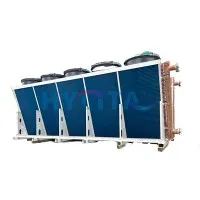
As a seasoned supplier of evaporator coils, I've witnessed firsthand the pivotal role these components play in various cooling and refrigeration systems. In this blog, we'll delve into the functions of an evaporator coil, exploring its significance in different applications and how it contributes to the overall efficiency of a system.
The Basics of an Evaporator Coil
An evaporator coil is a crucial part of a refrigeration or air - conditioning system. It is designed to absorb heat from the surrounding environment. The coil is typically made of materials like copper or stainless steel, each offering unique advantages. For instance, Refrigeration Copper Coil is known for its excellent thermal conductivity, which allows for efficient heat transfer. On the other hand, Stainless Steel Evap Coil is highly resistant to corrosion, making it suitable for harsh environments.
Heat Absorption: The Primary Function
The main function of an evaporator coil is to absorb heat. In a refrigeration system, the refrigerant enters the evaporator coil as a low - pressure liquid. As warm air from the surrounding area passes over the coil, the heat from the air is transferred to the refrigerant. This causes the refrigerant to evaporate, changing from a liquid state to a gaseous state.
For example, in a household refrigerator, the evaporator coil is located inside the fridge. When you open the fridge door, you can feel the cold air. This cold air is a result of the heat being removed from the inside of the fridge by the evaporator coil. The warm air inside the fridge comes into contact with the cold surface of the coil. The refrigerant in the coil absorbs the heat from the air, cooling it down. The cooled air then circulates back into the fridge, maintaining the low temperature required to keep food fresh.
Phase Change and Heat Transfer
The phase change of the refrigerant from liquid to gas is a key aspect of the evaporator coil's function. During this phase change, a large amount of heat energy is absorbed from the surroundings. This is based on the principle of latent heat. The latent heat of vaporization is the amount of heat required to change a substance from a liquid to a gas without changing its temperature.
In an air - conditioning system, the evaporator coil is located in the indoor unit. Warm indoor air is drawn over the coil by a fan. The refrigerant in the coil absorbs the heat from the air, causing the refrigerant to vaporize. The now - cool air is then blown back into the room, while the gaseous refrigerant is sent to the compressor for the next stage of the refrigeration cycle.
Humidity Control
Another important function of the evaporator coil is humidity control. When warm, moist air passes over the cold surface of the evaporator coil, the water vapor in the air condenses. This is similar to how dew forms on a cold surface on a warm morning. The condensed water droplets collect on the coil and are then drained away.
In a commercial building's air - conditioning system, humidity control is crucial. High humidity levels can make the indoor environment uncomfortable and can also lead to the growth of mold and mildew. By removing moisture from the air, the evaporator coil helps to maintain a comfortable and healthy indoor environment.
Efficiency and Energy Savings
The efficiency of an evaporator coil directly impacts the energy consumption of a refrigeration or air - conditioning system. A well - designed and properly maintained evaporator coil can transfer heat more efficiently, reducing the amount of energy required to cool a space.
For example, if an evaporator coil is dirty or clogged, the heat transfer process is hindered. The system has to work harder to achieve the same level of cooling, resulting in higher energy bills. Regular maintenance, such as cleaning the coil, can help to ensure its optimal performance.
Applications in Different Industries
Evaporator coils are used in a wide range of industries. In the food industry, they are essential for refrigeration units in supermarkets, restaurants, and food processing plants. These coils help to keep food products at the right temperature, preventing spoilage and ensuring food safety.
In the pharmaceutical industry, precise temperature control is critical for storing medications and vaccines. Evaporator coils play a vital role in maintaining the required low temperatures in cold storage facilities.
In the automotive industry, evaporator coils are used in car air - conditioning systems. They help to cool the air inside the vehicle, providing a comfortable driving experience.


When to Replace an Evaporator Coil
Over time, an evaporator coil may need to be replaced. Signs that it's time for a replacement include reduced cooling efficiency, strange noises coming from the system, and visible damage to the coil. If you're experiencing any of these issues, it might be a good idea to consider Evaporator Coil Replacement.
Conclusion
In conclusion, the evaporator coil is a vital component in refrigeration and air - conditioning systems. Its functions of heat absorption, humidity control, and contributing to energy efficiency are essential for maintaining comfortable and safe environments. Whether it's in your home, a commercial building, or an industrial facility, the evaporator coil plays a crucial role in keeping things cool.
If you're in the market for high - quality evaporator coils, we're here to help. Our team of experts can provide you with the right solutions for your specific needs. Contact us to discuss your requirements and start a procurement conversation. We look forward to working with you.
References
- ASHRAE Handbook of Fundamentals.
- Refrigeration and Air - Conditioning Technology by William C. Whitman, William M. Johnson, and John A. Tomczyk.