


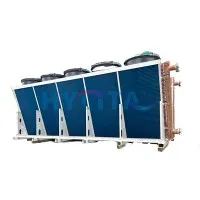
In the realm of energy - efficient building systems, heat - recovery ventilation (HRV) systems have gained significant popularity. They play a crucial role in maintaining indoor air quality while minimizing energy consumption. One of the key components in an advanced HRV system is the hot water economiser. As a supplier of Hot Water Economisers, I am excited to delve into how these devices work within a heat - recovery ventilation system.
The Basics of Heat - Recovery Ventilation Systems
Before we explore the hot water economiser, let's briefly understand the concept of a heat - recovery ventilation system. An HRV system is designed to exchange heat between the incoming fresh air and the outgoing stale air. In a typical building, a large amount of energy is used to heat or cool the incoming air to match the indoor temperature. An HRV system recovers a significant portion of the heat from the exhaust air and transfers it to the incoming fresh air. This reduces the energy required to condition the incoming air, leading to substantial energy savings and lower utility bills.
The system consists of two main air streams: the supply air stream, which brings in fresh outdoor air, and the exhaust air stream, which expels stale indoor air. A heat exchanger is at the heart of the HRV system, facilitating the transfer of heat between these two air streams.
What is a Hot Water Economiser?
A hot water economiser is a heat - exchange device that is integrated into the heat - recovery ventilation system. It works in tandem with the main heat exchanger of the HRV system to further enhance energy efficiency. The basic principle of a hot water economiser is to capture the waste heat from the exhaust air and use it to pre - heat the water in a hot water system.
The hot water economiser is typically installed in the exhaust air duct of the HRV system. As the warm, stale air from the building passes through the economiser, it comes into contact with a series of pipes or coils that contain cold water. Heat is transferred from the exhaust air to the water in the pipes, causing the water temperature to rise. This pre - heated water can then be used for various purposes, such as domestic hot water supply or space heating.
How Does a Hot Water Economiser Work?
Heat Transfer Process
The operation of a hot water economiser is based on the principles of heat transfer. There are three main modes of heat transfer: conduction, convection, and radiation. In a hot water economiser, convection and conduction are the primary modes of heat transfer.
When the warm exhaust air enters the economiser, it flows over the surface of the pipes or coils that contain cold water. The heat from the exhaust air is transferred to the outer surface of the pipes through convection. Convection occurs when the moving air molecules come into contact with the pipe surface and transfer their thermal energy.
Once the heat reaches the outer surface of the pipes, it is then conducted through the pipe material to the water inside. The metal pipes are good conductors of heat, allowing the heat to quickly pass through to the water. As the water absorbs the heat, its temperature increases.
System Components
A typical hot water economiser consists of several key components:
- Heat Exchanger Coils: These are the pipes or coils that carry the cold water. They are designed with a large surface area to maximize the contact between the exhaust air and the water, facilitating efficient heat transfer.
- Air Ducts: The exhaust air is guided through the air ducts to the hot water economiser. The ducts are designed to ensure a smooth and even flow of air over the heat exchanger coils.
- Water Inlet and Outlet: The cold water enters the economiser through the water inlet, and the pre - heated water exits through the water outlet. Valves and flow meters are often installed to control the flow rate of the water.
- Insulation: To prevent heat loss, the hot water economiser is usually insulated. This helps to maintain the efficiency of the heat transfer process and ensures that the pre - heated water retains its heat as it leaves the economiser.
Integration with the HRV System
The hot water economiser is integrated into the HRV system in such a way that it does not disrupt the normal operation of the main heat exchanger. In most cases, the economiser is installed downstream of the main heat exchanger in the exhaust air duct.
The main heat exchanger of the HRV system first transfers heat from the exhaust air to the incoming fresh air. After this initial heat exchange, the exhaust air still contains a significant amount of waste heat. The hot water economiser captures this remaining heat and uses it to pre - heat the water.
This integration allows for a more comprehensive use of the waste heat in the exhaust air. The energy that would otherwise be wasted is now harnessed to heat water, reducing the demand on the primary heating source, such as a boiler or a water heater.
Benefits of Using a Hot Water Economiser in an HRV System
Energy Savings
One of the most significant benefits of using a hot water economiser in an HRV system is energy savings. By pre - heating the water with the waste heat from the exhaust air, the amount of energy required to heat the water to the desired temperature is reduced. This can lead to substantial savings on energy bills, especially in buildings with high hot water demand.
Environmental Impact
Reducing energy consumption also has a positive environmental impact. By using less energy from fossil - fuel - based heating sources, the carbon footprint of the building is reduced. This contributes to a more sustainable and eco - friendly operation.
Improved System Efficiency
The hot water economiser enhances the overall efficiency of the heat - recovery ventilation system. It allows for a more complete utilization of the waste heat in the exhaust air, making the system more effective in reducing energy consumption.
Related Heat - Recovery Components
There are other heat - recovery components that are related to the hot water economiser. For example, the Exhaust Heat Exchanger is another important device in the heat - recovery process. It can be used in conjunction with the hot water economiser to further optimize the heat - recovery process. The exhaust heat exchanger transfers heat from the exhaust air to another medium, such as a refrigerant or a secondary fluid, which can then be used for various heating or cooling applications.
The Vapour Economizer in Boiler is also relevant. It is designed to recover heat from the flue gases of a boiler and use it to pre - heat the feedwater. This can improve the efficiency of the boiler and reduce fuel consumption.


Why Choose Our Hot Water Economisers
As a supplier of Hot Water Economisers, we offer high - quality products that are designed to meet the specific needs of different applications. Our hot water economisers are made from durable materials and are engineered for maximum efficiency.
We have a team of experienced engineers who can provide technical support and assistance in the installation and operation of our products. We also offer customized solutions to ensure that our hot water economisers are seamlessly integrated into your existing heat - recovery ventilation system.
Contact Us for Procurement
If you are interested in improving the energy efficiency of your building's heat - recovery ventilation system, our hot water economisers are an excellent choice. We invite you to contact us for procurement and further discussions. Our team is ready to answer your questions and provide you with detailed information about our products.
References
- ASHRAE Handbook of HVAC Systems and Equipment.
- Heat Transfer Principles and Applications by Frank Kreith and Raj M. Manglik.
- Energy - Efficient Building Design: A Practical Guide by David C. Crawley.