


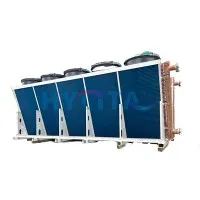
Hey there! As a supplier of condenser coils, I've seen firsthand how crucial it is to understand the ins and outs of these components. One aspect that often gets overlooked but can significantly impact performance is pressure drop. In this blog, I'll break down how pressure drop affects the performance of a condenser coil and why it matters to you.


What is Pressure Drop in a Condenser Coil?
Before we dive into the effects, let's quickly go over what pressure drop actually is. In simple terms, pressure drop is the difference in pressure between the inlet and the outlet of a condenser coil. It occurs as the refrigerant flows through the coil, encountering resistance from the tube walls, fins, and other internal components. This resistance causes a decrease in pressure, which can have a ripple effect on the overall performance of the coil.
How Pressure Drop Affects Heat Transfer
One of the primary functions of a condenser coil is to transfer heat from the refrigerant to the surrounding air. Pressure drop can have a direct impact on this process. When the pressure drop is too high, the refrigerant flow rate through the coil decreases. This means that less refrigerant is available to absorb and transfer heat, resulting in a lower heat transfer rate.
Think of it like a water hose. If you kink the hose, the water flow slows down, and less water comes out. Similarly, a high pressure drop in a condenser coil restricts the flow of refrigerant, reducing its ability to effectively transfer heat. As a result, the coil may not be able to cool the refrigerant as efficiently, leading to higher refrigerant temperatures and potentially reduced system performance.
Impact on Energy Efficiency
Energy efficiency is a top concern for many of our customers, whether they're using Industrial Condenser Unit in large industrial settings or Condenser and Coil for Data Center Cooling. Pressure drop plays a significant role in determining the energy efficiency of a condenser coil.
When the pressure drop is excessive, the compressor has to work harder to maintain the required refrigerant flow through the coil. This increased workload translates to higher energy consumption. In other words, a high-pressure drop can cause your cooling system to guzzle more electricity, leading to higher operating costs over time.
On the flip side, a well-designed condenser coil with an optimized pressure drop can operate more efficiently. By minimizing the resistance to refrigerant flow, the compressor doesn't have to work as hard, resulting in lower energy consumption and cost savings. So, if you're looking to cut down on your energy bills, paying attention to pressure drop is essential.
Effects on Refrigerant Distribution
Proper refrigerant distribution is crucial for the uniform performance of a condenser coil. Pressure drop can affect how the refrigerant is distributed within the coil. If the pressure drop is unevenly distributed across the coil, some areas may receive more refrigerant than others.
This uneven distribution can lead to hot spots and cold spots within the coil. Hot spots occur where there's insufficient refrigerant flow, while cold spots are areas with an excess of refrigerant. These temperature variations can reduce the overall efficiency of the coil and may even cause damage to the coil over time.
For example, in a Marine Condenser Unit, where reliability is of utmost importance, uneven refrigerant distribution due to high pressure drop can lead to premature component failure and costly repairs.
Condenser Coil Design and Pressure Drop
As a condenser coil supplier, we understand the importance of designing coils with an optimal pressure drop. Our engineers use advanced modeling and simulation techniques to ensure that our coils are designed to minimize pressure drop while maximizing heat transfer efficiency.
We carefully select the tube and fin materials, as well as the tube diameter and fin spacing, to reduce resistance to refrigerant flow. Additionally, we pay close attention to the layout of the coil, ensuring that the refrigerant path is as smooth and efficient as possible.
By investing in high-quality condenser coils with an optimized pressure drop, you can ensure that your cooling system operates at peak performance, saving you money on energy costs and reducing the risk of costly breakdowns.
Monitoring and Maintaining Pressure Drop
Once you've installed a condenser coil, it's important to monitor the pressure drop regularly. A sudden increase in pressure drop could indicate a problem, such as a clogged filter, a damaged tube, or a build-up of debris on the fins.
Regular maintenance, including cleaning the coils and checking for any signs of damage, can help prevent issues that could lead to an increase in pressure drop. By keeping the pressure drop within the recommended range, you can ensure that your condenser coil continues to perform at its best.
Conclusion
In conclusion, pressure drop is a critical factor that can significantly affect the performance of a condenser coil. From heat transfer and energy efficiency to refrigerant distribution, the impact of pressure drop is far-reaching. As a condenser coil supplier, we're committed to providing our customers with high-quality coils that are designed to minimize pressure drop and maximize performance.
If you're in the market for a new condenser coil or have any questions about pressure drop and its effects, don't hesitate to reach out. We're here to help you find the right solution for your specific needs. Whether you're looking for an Industrial Condenser Unit, Condenser and Coil for Data Center Cooling, or a Marine Condenser Unit, we've got you covered.
Let's work together to ensure that your cooling system operates at its best, saving you money and keeping your equipment running smoothly. Contact us today to start the conversation!
References
- Incropera, F. P., DeWitt, D. P., Bergman, T. L., & Lavine, A. S. (2007). Fundamentals of Heat and Mass Transfer. John Wiley & Sons.
- ASHRAE Handbook - Fundamentals. (2017). American Society of Heating, Refrigerating and Air-Conditioning Engineers.