


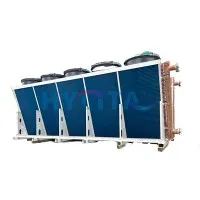
In the realm of industrial cooling systems, cooler condensers play a pivotal role in maintaining the efficiency and reliability of various processes. As a reputable supplier of cooler condensers, I've witnessed firsthand the intricate relationship between pressure and the performance of these crucial components. In this blog post, I'll delve into the science behind how pressure affects the performance of a cooler condenser, drawing on industry knowledge and real - world experience.
Understanding the Basics of Cooler Condensers
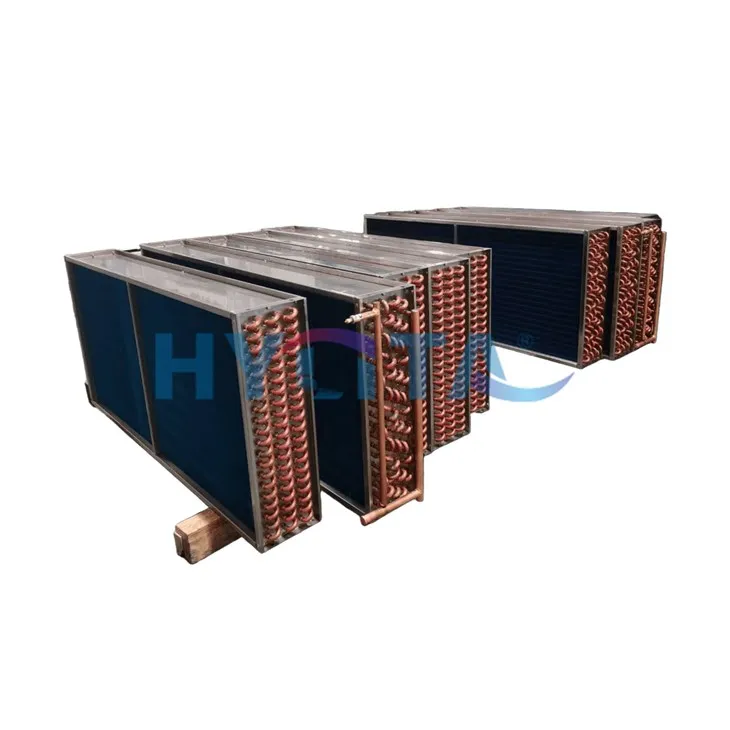
Before we explore the impact of pressure, it's essential to understand what a cooler condenser does. A cooler condenser is a heat exchanger that transfers heat from a hot fluid (usually a gas or vapor) to a cooling medium (such as air, water, or oil). This process causes the hot fluid to condense into a liquid state. There are different types of cooler condensers available, including Air Intermediate Cooler, Water Intermediate Cooler, and Oil Intermediate Cooler. Each type has its own unique characteristics and applications, but they all operate on the fundamental principle of heat transfer.

The Role of Pressure in Heat Transfer
Pressure is a critical factor in the heat transfer process within a cooler condenser. According to the ideal gas law, PV = nRT, where P is pressure, V is volume, n is the number of moles of gas, R is the ideal gas constant, and T is temperature. This equation shows that pressure and temperature are directly related when the volume and the amount of gas are constant. In a cooler condenser, changes in pressure can significantly affect the temperature of the hot fluid and the cooling medium, which in turn impacts the rate of heat transfer.
Impact on Condensation Process
The condensation process is highly sensitive to pressure. When the pressure of a vapor is increased, its saturation temperature also increases. This means that at a higher pressure, the vapor needs to be cooled to a higher temperature to condense. For example, in a steam condenser, if the pressure inside the condenser is higher than the design pressure, the steam will condense at a higher temperature. This reduces the temperature difference between the steam and the cooling water, which is the driving force for heat transfer. As a result, the rate of heat transfer decreases, and the condenser's performance is compromised.
Conversely, if the pressure is too low, the vapor may not condense efficiently. The low pressure can cause the vapor to expand, reducing its density and making it more difficult for the heat transfer to occur. In some cases, a low - pressure condition can lead to incomplete condensation, resulting in the presence of non - condensed vapor in the system. This can cause problems such as corrosion, reduced efficiency, and increased energy consumption.
Effect on Cooling Medium
Pressure also affects the performance of the cooling medium. In the case of a water - cooled condenser, the pressure of the cooling water can influence its flow rate and heat - carrying capacity. If the water pressure is too low, the flow rate may be insufficient to remove the heat effectively from the condenser. This can lead to an increase in the temperature of the cooling water and a decrease in the overall heat transfer efficiency.
On the other hand, if the water pressure is too high, it can cause excessive stress on the condenser tubes, leading to potential leaks or damage. Additionally, high - pressure water can create turbulence, which may disrupt the boundary layer between the water and the tube surface, reducing the heat transfer coefficient.
In an air - cooled condenser, the pressure of the air can affect its density and flow rate. A higher air pressure generally means a higher air density, which can increase the heat - carrying capacity of the air. However, increasing the air pressure also requires more energy to move the air through the condenser. Therefore, there is an optimal pressure range for air - cooled condensers to achieve the best balance between heat transfer efficiency and energy consumption.
Pressure and System Efficiency
The performance of a cooler condenser is closely related to the overall efficiency of the system in which it operates. A well - functioning condenser can help to reduce energy consumption, improve the reliability of the equipment, and extend its service life.
Energy Consumption
When the pressure in a cooler condenser is not optimized, the system has to work harder to achieve the desired level of heat transfer. For example, if the condenser is operating at a higher pressure than necessary, the compressor or pump that is used to circulate the hot fluid or the cooling medium has to consume more energy to maintain the flow. This increased energy consumption not only leads to higher operating costs but also has a negative impact on the environment.
Equipment Reliability
Pressure variations can also affect the reliability of the condenser and other components in the system. High - pressure conditions can cause mechanical stress on the condenser tubes, headers, and other parts, leading to fatigue and potential failure. Low - pressure conditions, on the other hand, can cause cavitation in pumps and other fluid - handling equipment, which can damage the impellers and reduce their performance.
Monitoring and Controlling Pressure
To ensure the optimal performance of a cooler condenser, it is essential to monitor and control the pressure within the system. This can be achieved through the use of pressure sensors, controllers, and valves.
Pressure Sensors
Pressure sensors are used to measure the pressure of the hot fluid, the cooling medium, and the condenser itself. These sensors provide real - time data that can be used to monitor the performance of the condenser and detect any abnormal pressure conditions. For example, if the pressure of the steam in a steam condenser exceeds the safe operating limit, the pressure sensor can trigger an alarm, allowing the operator to take corrective action.
Controllers and Valves
Controllers and valves are used to regulate the pressure in the system. For example, a pressure - control valve can be installed in the inlet or outlet of the condenser to maintain a constant pressure. The controller receives the pressure data from the sensors and adjusts the valve position accordingly. This helps to ensure that the condenser operates within the optimal pressure range, maximizing its performance and efficiency.
Conclusion
In conclusion, pressure has a profound impact on the performance of a cooler condenser. From the condensation process to the efficiency of the cooling medium and the overall system, every aspect of the condenser's operation is influenced by pressure. As a cooler condenser supplier, we understand the importance of providing high - quality condensers that can withstand a wide range of pressure conditions. We also offer comprehensive support and solutions to help our customers optimize the pressure in their cooling systems.
If you're in the market for a cooler condenser or need assistance with pressure optimization in your existing system, we'd love to hear from you. Our team of experts is ready to provide you with the best products and services to meet your specific needs. Contact us today to start a discussion about your cooling requirements and explore how we can help you achieve optimal performance and efficiency.
References
- Incropera, F. P., & DeWitt, D. P. (2002). Fundamentals of Heat and Mass Transfer. John Wiley & Sons.
- Cengel, Y. A., & Boles, M. A. (2010). Thermodynamics: An Engineering Approach. McGraw - Hill.
- Green, D. W., & Perry, R. H. (2007). Perry's Chemical Engineers' Handbook. McGraw - Hill.