


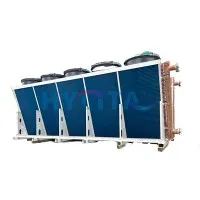
In the realm of refrigeration and air - conditioning systems, two components stand out as fundamental to the entire process: the evaporator coil and the condenser coil. As a seasoned evaporator coil supplier, I have witnessed firsthand the intricate dance between these two coils and their crucial role in maintaining comfortable indoor environments and preserving perishable goods. In this blog post, I will delve into the relationship between the evaporator coil and the condenser coil, exploring their functions, interactions, and the importance of their proper operation.
Understanding the Evaporator Coil
First, let's start with the evaporator coil. The evaporator coil is a key part of the refrigeration cycle. It is typically located inside the air - handling unit in an air - conditioning system or within the freezer or refrigerator compartment. The primary function of the evaporator coil is to absorb heat from the surrounding environment.
When the refrigerant, a special fluid designed to change states easily, enters the evaporator coil, it is in a low - pressure, low - temperature liquid state. As warm air from the room or the refrigerated space passes over the cold evaporator coil, the heat from the air is transferred to the refrigerant. This causes the refrigerant to evaporate, changing from a liquid to a vapor. The now - cooled air is then blown back into the space, providing cooling.
At our company, we offer a wide range of evaporator coils, including the Refrigeration Copper Coil. Copper is an excellent material for evaporator coils due to its high thermal conductivity, which allows for efficient heat transfer. Our refrigeration copper coils are carefully designed and manufactured to ensure maximum performance and durability. We also provide Stainless Steel Evap Coil options, which are highly resistant to corrosion and suitable for harsh environments.
The Role of the Condenser Coil
On the other hand, the condenser coil is responsible for releasing the heat that the evaporator coil has absorbed. The condenser coil is usually located outside the building in an air - conditioning system or at the back of a refrigerator.


After the refrigerant has evaporated in the evaporator coil and turned into a high - pressure, high - temperature vapor, it is pumped to the condenser coil. As the hot refrigerant vapor flows through the condenser coil, it comes into contact with the cooler outdoor air (in the case of an air - cooled condenser) or water (in the case of a water - cooled condenser). The heat from the refrigerant is transferred to the surrounding medium, causing the refrigerant to condense back into a liquid state.
Once the refrigerant has condensed, it is ready to start the cycle again. It is then sent back to the evaporator coil through an expansion valve, which reduces the pressure of the refrigerant, preparing it for the next round of heat absorption.
The Symbiotic Relationship
The relationship between the evaporator coil and the condenser coil is symbiotic. They rely on each other to complete the refrigeration cycle. Without the evaporator coil absorbing heat, there would be no heat to be released by the condenser coil. Conversely, if the condenser coil fails to release the heat, the refrigerant would not be able to return to a liquid state and the refrigeration cycle would break down.
The efficiency of one coil directly impacts the performance of the other. For example, if the evaporator coil becomes dirty or clogged, the heat transfer rate will decrease. This means that the refrigerant will not be able to absorb as much heat as it should, resulting in less cooling. As a result, the condenser coil will have less heat to release, and the overall system efficiency will drop.
Similarly, if the condenser coil is dirty or obstructed, the heat transfer from the refrigerant to the surrounding medium will be impaired. The refrigerant will not be able to condense properly, and the pressure in the system will increase. This can lead to overheating of the compressor, reduced cooling capacity, and even system failure.
Maintenance and Replacement
Proper maintenance of both the evaporator coil and the condenser coil is essential for the long - term performance of the refrigeration or air - conditioning system. Regular cleaning of the coils can prevent dirt, dust, and debris from accumulating, which can impede heat transfer.
In some cases, the coils may need to be replaced. Over time, the coils can corrode, develop leaks, or suffer from mechanical damage. When this happens, it is important to choose high - quality replacement parts. We offer Evaporator Coil Replacement services, providing customers with reliable and efficient coils that are designed to fit their specific systems.
Conclusion
In conclusion, the evaporator coil and the condenser coil are two indispensable components of the refrigeration and air - conditioning systems. Their relationship is crucial for the proper functioning of these systems. As an evaporator coil supplier, we understand the importance of providing high - quality coils that work in harmony with the condenser coils to ensure optimal performance.
If you are in need of evaporator coils for your refrigeration or air - conditioning system, or if you require coil replacement services, please do not hesitate to contact us. We are committed to providing our customers with the best products and services to meet their needs. Let's work together to ensure the efficient operation of your refrigeration systems.
References
- ASHRAE Handbook of Refrigeration. American Society of Heating, Refrigerating and Air - Conditioning Engineers.
- Refrigeration and Air Conditioning Technology. William C. Whitman, William M. Johnson, John Tomczyk, and Eugene Silberstein.