


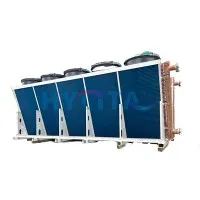
Hey there! As a supplier of economisers for boilers, I'm super stoked to break down how these nifty devices work. You see, an economiser in a boiler is like a secret weapon for saving energy and making your boiler more efficient. Let's dive right in!
The Basics of a Boiler Economiser
First off, what's the deal with a boiler economiser? Well, in a nutshell, it's a heat exchanger. Yup, you heard it right. It's all about transferring heat from one thing to another. In the case of a boiler, the economiser takes heat from the hot exhaust gases that are leaving the boiler and uses it to pre - heat the water that's going into the boiler.
Think about it. When you're boiling water on your stovetop, it takes a while to get the cold water up to boiling point. But if you start with warm water, it'll reach that boiling temperature much faster. That's exactly what an economiser does for a boiler. It pre - heats the feedwater, so the boiler doesn't have to work as hard to turn that water into steam.
How It Actually Works
Let's get into the nitty - gritty of how an economiser does its job. The process starts with the hot exhaust gases. These gases are a by - product of the combustion process that happens inside the boiler. They're pretty hot, usually around 300 to 400 degrees Celsius (that's 572 to 752 degrees Fahrenheit for you folks in the US).


The exhaust gases flow through the tubes or passages of the economiser. On the other side of these tubes, the feedwater is flowing. The heat from the exhaust gases is transferred to the feedwater through the walls of the tubes. This is called heat transfer, and it's based on the principle that heat always moves from a hotter object to a cooler one.
As the heat is transferred, the temperature of the exhaust gases drops. Meanwhile, the temperature of the feedwater rises. By the time the exhaust gases leave the economiser, they're a lot cooler, and the feedwater is much warmer than it was when it first entered.
Types of Economisers
There are a few different types of economisers out there, but the two main ones are the non - condensing and condensing economisers.
Non - condensing economisers are the more traditional type. They work by simply transferring heat from the exhaust gases to the feedwater without causing the water vapor in the exhaust gases to condense. These economisers are great for most applications and can still save a significant amount of energy. You can learn more about Economiser Heat Exchanger on our website.
Condensing economisers, on the other hand, are a bit more advanced. They're designed to not only transfer heat but also to condense the water vapor in the exhaust gases. When water vapor condenses, it releases latent heat, which can be captured and used to further pre - heat the feedwater. This makes condensing economisers even more efficient than non - condensing ones.
Why It's a Big Deal
So, why should you care about an economiser in your boiler? Well, there are a few huge reasons.
First of all, energy efficiency. As I mentioned earlier, by pre - heating the feedwater, the boiler doesn't have to use as much fuel to turn the water into steam. This means lower fuel costs for you. In today's world, where energy prices are constantly rising, any way to save on fuel is a major plus.
Secondly, it's better for the environment. When you use less fuel, you're also reducing your carbon emissions. And let's face it, we could all do our part to be a bit more eco - friendly. With an economiser, you can cut down on your carbon footprint while still getting the same amount of steam from your boiler.
Another benefit is that it can extend the life of your boiler. By reducing the workload on the boiler, you're also reducing the wear and tear. This means fewer maintenance issues and a longer lifespan for your boiler.
Carbon Steel Economisers
One of the popular materials used in economisers is carbon steel. Carbon steel economisers are known for their durability and cost - effectiveness. They can handle high temperatures and pressures, making them a great choice for many boiler applications.
Carbon steel is also relatively easy to work with, which means that the economisers can be fabricated to fit different boiler designs. If you're interested in learning more about Carbon Steel Economiser, just follow the link on our site.
Heat Exhaust Recovery
A significant aspect of an economiser's operation is heat exhaust recovery. As I've mentioned before, the economiser captures the heat from the exhaust gases that would otherwise be wasted. This heat is then used to pre - heat the feedwater.
Heat exhaust recovery is a crucial part of making your boiler system more energy - efficient. By recovering this heat, you're essentially getting more bang for your buck. You can read more about Heat Exhaust Recovery on our website to understand the process in more detail.
Let's Get Talking
If you're looking to upgrade your boiler system, an economiser is a no - brainer. It's a simple addition that can bring about huge savings in energy costs and environmental impact.
As a supplier, we've got a wide range of economisers to suit different boiler sizes and applications. Whether you need a non - condensing or a condensing economiser, we've got you covered. And if you're interested in a carbon steel economiser, we can offer you high - quality options at competitive prices.
So, if you're ready to start saving on energy costs and making your boiler more efficient, don't hesitate to reach out. We'd love to have a chat with you about your specific needs and how our economisers can fit into your system. Let's work together to make your boiler system the best it can be!
References
- "Heat Exchanger Design Handbook", by Hewitt, G. F.
- "Boiler Operation Engineering", by Babcock & Wilcox