


Cooling Coils
Your Professional Cooling Coils Supplier
Shenzhen Hylita Heat Exchange Equipment Co., Ltd. was established on July 2, 2015, located in Maluan Chuanggu Industrial Park, Jinlong Avenue, Shahu Community, Biling Street, Pingshan District, Shenzhen. The company focuses on the development and sales of refrigeration and heat exchange equipment technology, and also involves fields such as metal processing and component manufacturing.we have always been guided by meeting customer needs, continuously optimizing products and services, and gradually emerging as a promising enterprise in the field of heat exchange equipment.


Why Choose Us
Production Market
Our heat exchanger products are popular in multiple regions around the world, particularly in Southeast Asia where they are highly favored by customers in countries such as Indonesia, Malaysia, and Thailand. Due to the vigorous development of industry in Indonesia, the demand for heat exchangers has surged.
Our Service
Shenzhen Hylita Heat Exchange Equipment Co., Ltd. has established a full process service system to provide customers with professional and thoughtful support.
Our Factory
Shenzhen Hylita Heat Exchange Equipment Co., Ltd. is located in Guangdong, China, with a spacious factory of nearly 4000 square meters. There are currently 45 workers, and the annual production equipment requires over 20 million tons of metal materials.
On-Time Delivery
Our supply chain management and production processes operate efficiently to ensure your orders are delivered punctually.
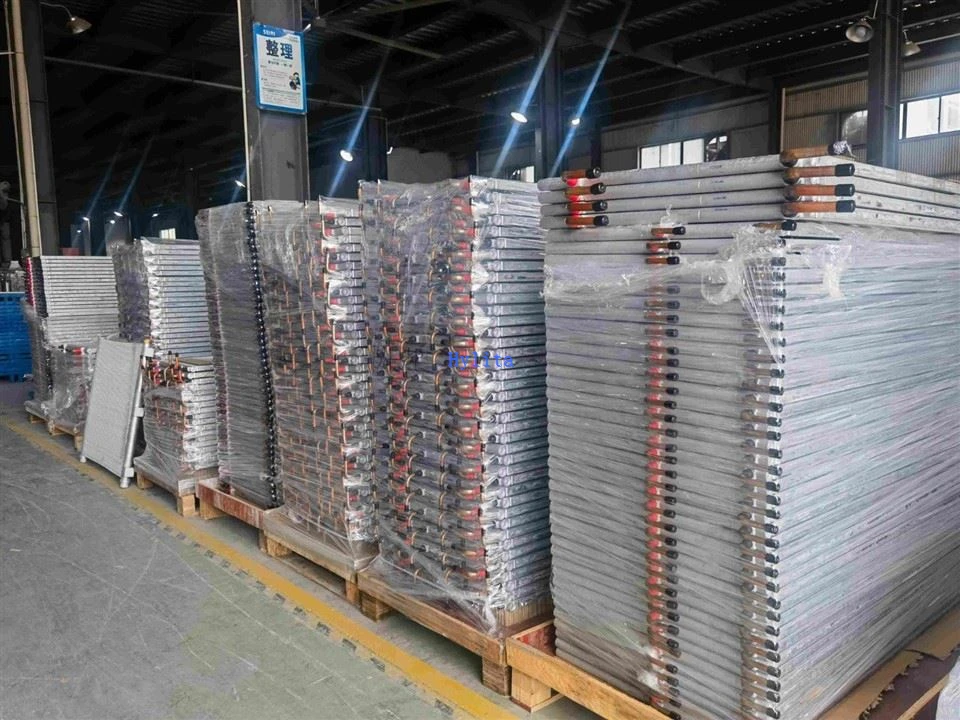
High heat transfer efficiency Because the boundary layer is constantly broken due to the disturbance of the fins to the fluid, it has a large heat transfer coefficient; At the same time, due to the thin diaphragm and fins, which have high thermal conductivity, the tube fin heat exchanger can achieve high efficiency.
Compact As the tube fin heat exchanger has an extended secondary surface, its specific surface area can reach 1000 ㎡/m3.
The reason for its lightness is that it is compact and mostly made of aluminum alloy. Now steel, copper, and composite materials have also been produced in batches.
The tube fin heat exchanger with strong adaptability can be applied to the heat transfer between gas-gas, gas-liquid, liquid, and various fluids, as well as the phase change heat transfer with centralized change. The arrangement and combination of flow channels can adapt to different heat transfer conditions such as countercurrent, cross flow, multi-stream flow, and multi-pass flow.
The manufacturing process is strict and complicated. It is easy to block, not resistant to corrosion, and it is difficult to clean and repair, so it can only be used in places where the heat exchange medium is clean, noncorrosive, not easy to scale, not easy to deposit, and not easy to block.
Types of Cooling Coils
Direct Expansion (DX) Coils: DX coils use refrigerant that expands and evaporates inside the coil tubes, absorbing heat directly from the air passing over them. These coils are generally used in a variety of systems (split systems, packaged units, and so on). DX systems are compact and suitable for residential and light commercial applications.
Chilled Water Coils: These use water that has been cooled by a central chiller system. This chilled water flows through the coil tubes while air passes over them, transferring heat to the water. These coils are often used in large commercial or industrial HVAC systems.
Flooded Coils: Flooded coils are a type of DX coil where the refrigerant floods the coil rather than evaporating only in part. This improves heat transfer efficiency by maintaining a more consistent temperature across the coil surface. They’re often used in specialised industrial applications where greater precision is required.
Fin and Tube Coils: These coils consist of metal tubes (usually copper) and fins (typically aluminium) that increase the surface area for better heat exchange. Both DX and chilled water coils often use this construction method.
Plate Heat Exchanger Coils: Although less common in standard HVAC systems, plate-type coils are used where space is limited or where a more compact, high-efficiency heat exchange is needed. They use thin metal plates stacked together to allow air and coolant to flow over alternating surfaces.
Tubes: These are the primary channels through which the fluid or gas to be cooled flows. Tubes are usually made of materials with high thermal conductivity, such as copper, aluminum, stainless steel, or titanium, to facilitate efficient heat transfer.
Fins: Fins are thin, extended surfaces attached to the tubes. Their main function is to increase the surface area available for heat transfer. By increasing the surface area, fins enhance the rate of heat exchange between the fluid inside the tubes and the surrounding coolant. Fins can be made of various materials, including aluminum, which is lightweight and has good thermal conductivity.
Headers: Headers are used to distribute the fluid evenly among the tubes. They ensure that the flow of the fluid is balanced across the entire cooling coil, maximizing the efficiency of the heat transfer process.
How To Maintain Cooling Coils For Optimal Performance
Cleaning: Dust, dirt and debris can insulate the coils and reduce their ability to absorb heat. Clean the coils at least twice a year using a soft brush, compressed air, or a coil cleaning solution. For commercial systems or coils that are hard to access, consider professional cleaning to ensure thorough results.
Replace/Clean Filters: Dirty filters restrict airflow, which can lead to coil freezing and poor system performance. Check filters monthly and replace or clean them (depending on type) every 1–3 months, especially during peak cooling seasons.
Check for Corrosion or Leaks: Inspect coils for signs of rust, pitting, or refrigerant leaks. Corrosion weakens coil materials and can lead to refrigerant loss, reducing efficiency. Catching issues early helps avoid expensive repairs or full coil replacement.
Ensure Proper Drainage: Blocked condensate drains can cause water to back up and damage the coil or surrounding areas. Regularly check and clear the drain pan and lines to prevent clogs and water damage.
Maintain Surrounding Components: Ensure that blower fans, ductwork, and vents are clean and unobstructed. Poor airflow across the coils can lead to uneven cooling, ice formation, and higher energy use.
Schedule Professional Inspections Annually: While basic maintenance can be done by the property owner, a certified HVAC technician should inspect and service the system at least once a year. They can check refrigerant levels, pressure, and system integrity, and advise whether the coils need repair or replacement.
How a Cooling Coils Works
Fluid Inlet
The fluid or gas that needs to be cooled enters the cooling coil through the inlet header. The fluid then flows through the tubes, where it comes into contact with the inner surface of the tubes.
Heat Transfer
As the fluid flows through the tubes, heat is transferred from the fluid to the tube walls by conduction. The high thermal conductivity of the tube material allows the heat to quickly pass through the tube walls. At the same time, a coolant, such as water or refrigerant, flows around the outside of the tubes. The fins on the tubes increase the contact area between the tube surface and the coolant, promoting efficient heat transfer from the tube walls to the coolant by convection.
Coolant Circulation
The coolant absorbs the heat from the tube walls and carries it away. In some systems, the coolant is continuously circulated through a cooling system, such as a chiller or a cooling tower, to remove the heat and maintain its low temperature. In other cases, the coolant may be a refrigerant that undergoes a phase - change process (evaporation) to absorb heat more effectively.
Fluid Outlet
After the heat has been transferred to the coolant, the cooled fluid exits the cooling coil through the outlet header. The temperature of the fluid is significantly reduced, and it can then be used in the subsequent processes of the system.
Applications Of Cooling Coils
HVAC Systems
In heating, ventilation, and air - conditioning (HVAC) systems, cooling coils are used to cool and dehumidify the air. They are an integral part of air handlers and rooftop units, helping to maintain a comfortable indoor environment by removing heat and moisture from the air.
Industrial Processes
Cooling coils are used in many industrial processes, such as food and beverage processing, pharmaceutical manufacturing, and chemical production. In these industries, cooling coils are used to control the temperature of various fluids and gases, ensuring the quality and efficiency of the production processes.
Refrigeration Systems
In refrigeration systems, cooling coils are used as evaporators. The refrigerant inside the coils absorbs heat from the surrounding environment, causing it to evaporate. This process cools the space or the product in contact with the coil.
We're professional cooling coils manufacturers and suppliers in China, providing high quality customized products with low price. We warmly welcome you to wholesale cooling coils for sale here from our factory.
Shell And Tube Coil Cooler, Stainless Steel Coil Cooler, stainless steel marine coil