


Industrial Heat Exchanger
Your Professional Industrial Heat Exchanger Supplier
Shenzhen Hylita Heat Exchange Equipment Co., Ltd. was established on July 2, 2015, located in Maluan Chuanggu Industrial Park, Jinlong Avenue, Shahu Community, Biling Street, Pingshan District, Shenzhen. The company focuses on the development and sales of refrigeration and heat exchange equipment technology, and also involves fields such as metal processing and component manufacturing.we have always been guided by meeting customer needs, continuously optimizing products and services, and gradually emerging as a promising enterprise in the field of heat exchange equipment.
Why Choose Us
Product Application
The products of Shenzhen Hylita Heat Exchange Equipment Co., Ltd. have a wide range of applications. In the field of chemical engineering, it is used for heating, cooling, and heat recovery of reaction materials to ensure efficient and stable production. In the energy industry, assisting power plant turbine cooling, waste heat recovery, and improving energy utilization efficiency. In terms of HVAC, regulate indoor temperature and humidity to create a comfortable space. In food processing, it is used for sterilization and cooling processes to ensure food safety. In the pharmaceutical process, precise temperature control is used to meet the stringent requirements of drug production.
Production Market
Our heat exchanger products are popular in multiple regions around the world, particularly in Southeast Asia where they are highly favored by customers in countries such as Indonesia, Malaysia, and Thailand. Due to the vigorous development of industry in Indonesia, the demand for heat exchangers has surged.
Our Service
Shenzhen Hylita Heat Exchange Equipment Co., Ltd. has established a full process service system to provide customers with professional and thoughtful support.
Our Factory
Shenzhen Hylita Heat Exchange Equipment Co., Ltd. is located in Guangdong, China, with a spacious factory of nearly 4000 square meters. There are currently 45 workers, and the annual production equipment requires over 20 million tons of metal materials.
Advantages of Industrial Heat Exchanger
Energy Efficiency
One of the most significant benefits of industrial heat exchangers is their ability to improve energy efficiency. These systems are designed to minimize energy waste by transferring heat from one fluid to another, allowing the heat to be reused rather than lost.
Improved Process Control
Precision is key in industries such as chemical processing, food production, and pharmaceuticals, where maintaining exact temperature control is critical for product quality. Industrial heat exchangers allow for more accurate temperature regulation, ensuring that fluids remain within a desired range. This improved process control can lead to enhanced product consistency, reduced waste, and increased operational reliability.
Versatility and Customization
Industrial heat exchangers come in various types and designs, making them highly versatile for different applications. Whether your business needs a plate, shell-and-tube, or air-cooled heat exchanger, there’s a solution to fit your specific requirements. Many manufacturers offer customized options, allowing businesses to tailor their heat exchangers to their exact needs in terms of size, material, and configuration.
Enhanced Safety
In industrial settings, maintaining safe operating conditions is of utmost importance. Industrial heat exchangers contribute to safety by efficiently managing temperature fluctuations, preventing overheating, and reducing the risk of equipment failure.
Specification
|
Item |
Detail |
|
Core Design |
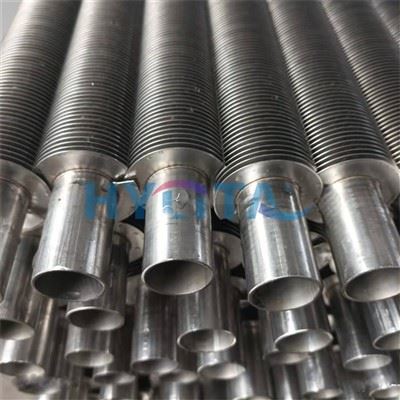
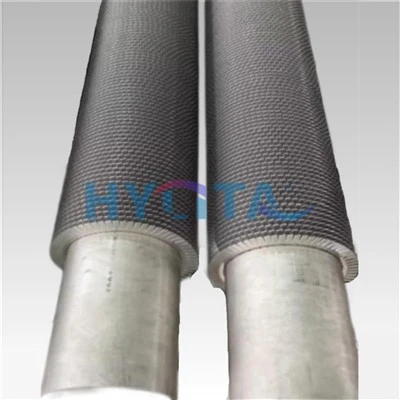
H - shaped copper fins |
|
Thermal Conductivity |
401 W/m·K (copper's inherent property) |
|
Temperature Resistance |
Up to 350°C |
|
Efficiency Boost |
Reduces energy losses by up to 25% |
|
Fouling Reduction |
Stepped fin profile minimizes particle accumulation |
Double Pipe Heat Exchangers: These are the simplest form of heat exchangers, consisting of one pipe inside another. They are ideal for small-scale operations and are easy to clean and maintain.
Plate Heat Exchangers: Comprising multiple thin, slightly separated plates, these exchangers allow for a large surface area, facilitating efficient heat transfer. They are compact and suitable for operations where space is a constraint.
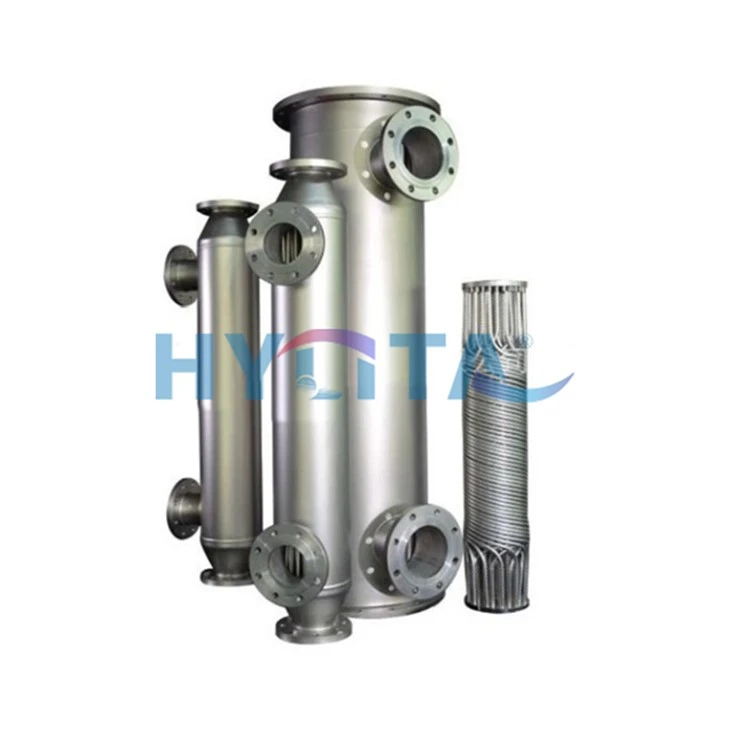

Tube Heat Exchangers: These are commonly used in industries due to their robustness. They consist of a set of tubes, either in a shell or an enclosure, allowing fluids to flow through and exchange heat.
Direct Contact Heat Exchangers: As the name suggests, in these exchangers, the two fluids come into direct contact without any barrier, leading to heat exchange. They are efficient but require the fluids to be immiscible.
Components of Industrial Heat Exchanger
Heat Exchanger Baffle Plate
Located inside the shell, the baffle plate guides the flow of the medium, increasing its velocity and turbulence, thereby enhancing heat transfer efficiency.
Heat Exchanger Corrugated Tube
A core component of the heat exchanger, the corrugated tube is primarily used to increase the heat transfer area, thus improving heat transfer efficiency. Its special corrugated shape also enhances flexibility and pressure resistance, allowing the heat exchanger to operate effectively under high pressure.
Heat Exchanger Tube Sheet
Positioned inside the heat exchangers shell, the tube sheet fixes the pipes, preventing displacement, vibration, and wear. It also ensures the flow direction and velocity of the medium, enhancing heat transfer efficiency.
Heat Exchanger Thermal Insulation Material
This material is employed to reduce energy loss during the heat transfer process, preventing thermal energy leakage and enhancing the heat efficiency of the heat exchanger. Common thermal insulation materials include glass wool, rock wool, and aluminum silicate fiber.
Heat Exchanger Pipe Clamp
Used to secure pipelines, the pipe clamp prevents pipe loosening or detachment, ensuring the normal flow of the medium. Additionally, it reduces the thermal expansion and contraction of the pipes, ensuring the safety and stability of the pipelines.
Heat Exchanger Leak Detector
The leak detector is primarily used to monitor whether leakage occurs in the heat exchanger. It promptly alarms in the event of a leak, ensuring the safety and reliability of the equipment.
Used of Industrial Heat Exchanger
HVAC Systems
Heat exchangers play a vital role in heating and cooling systems by maintaining indoor temperatures and improving energy efficiency. They ensure that homes, offices, and commercial spaces remain comfortable while reducing energy consumption.
Power Plants
They are used to recover waste heat and optimize energy production. By recycling energy, power plants improve efficiency and lower operational costs, making them more environmentally friendly.
Refrigeration and Air Conditioning
Heat exchangers help cool down refrigerants and maintain optimal performance. They are essential in maintaining the desired temperature for refrigeration systems in households and industries.
Automotive Industry
Used in car radiators to keep engines cool and improve fuel efficiency. They prevent engines from overheating, ensuring smoother operation and longer lifespan of vehicles.
Packaging & Logistics
Packaging
Protected with anti - scratch and shock - absorbing materials. Plates are separated to prevent damage during transit, and the frame is secured in a sturdy crate.
Delivery Time
7 - 17 working days after order confirmation, depending on customization (e.g., plate quantity, gasket material). Shipped via freight carriers suitable for industrial equipment.
We're professional industrial heat exchanger manufacturers and suppliers in China, providing high quality customized products with low price. We warmly welcome you to wholesale industrial heat exchanger for sale here from our factory.
H fin Heat Exchanger, industrial heat exchanger, Staggered Fin Heat Exchanger