


Plate and Frame Heat Exchanger
Your Professional Plate And Frame Heat Exchanger Supplier
Shenzhen Hylita Heat Exchange Equipment Co., Ltd. was established on July 2, 2015, located in Maluan Chuanggu Industrial Park, Jinlong Avenue, Shahu Community, Biling Street, Pingshan District, Shenzhen. The company focuses on the development and sales of refrigeration and heat exchange equipment technology, and also involves fields such as metal processing and component manufacturing.we have always been guided by meeting customer needs, continuously optimizing products and services, and gradually emerging as a promising enterprise in the field of heat exchange equipment.
Why Choose Us
Product Application
The products of Shenzhen Hylita Heat Exchange Equipment Co., Ltd. have a wide range of applications. In the field of chemical engineering, it is used for heating, cooling, and heat recovery of reaction materials to ensure efficient and stable production. In the energy industry, assisting power plant turbine cooling, waste heat recovery, and improving energy utilization efficiency. In terms of HVAC, regulate indoor temperature and humidity to create a comfortable space. In food processing, it is used for sterilization and cooling processes to ensure food safety. In the pharmaceutical process, precise temperature control is used to meet the stringent requirements of drug production.
Production Market
Our heat exchanger products are popular in multiple regions around the world, particularly in Southeast Asia where they are highly favored by customers in countries such as Indonesia, Malaysia, and Thailand. Due to the vigorous development of industry in Indonesia, the demand for heat exchangers has surged.
Our Service
Shenzhen Hylita Heat Exchange Equipment Co., Ltd. has established a full process service system to provide customers with professional and thoughtful support.
Our Factory
Shenzhen Hylita Heat Exchange Equipment Co., Ltd. is located in Guangdong, China, with a spacious factory of nearly 4000 square meters. There are currently 45 workers, and the annual production equipment requires over 20 million tons of metal materials.
High value for overall heat transfer coefficient, for the same two fluids, a flat plate heat exchanger typically has a U value much higher than either a shell and tube heat exchanger or a spiral heat exchanger.
Compact design – The combination of high value for the overall heat transfer coefficient and the general compact configuration of the flat plate heat exchanger lead to its ability to have the same thermal capacity as a shell and tube heat exchanger as much as five times its size.
Easy maintenance and cleaning – The fact that a plate and frame heat exchanger can be taken apart as discussed in the previous section, allows for easy cleaning and maintenance. A plate and frame heat exchanger can be designed to allow for easy addition or removal of plates to expand or reduce its heat transfer capacity.
Temperature control – A flat plate heat exchanger works well with small temperature differences between the hot fluid and the cold fluid.
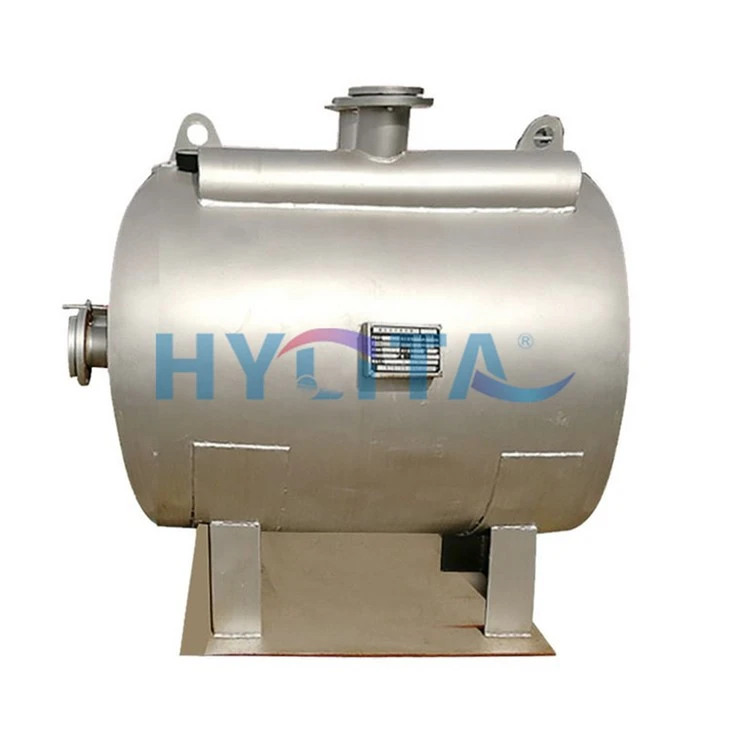
Types of Plate And Frame Heat Exchanger

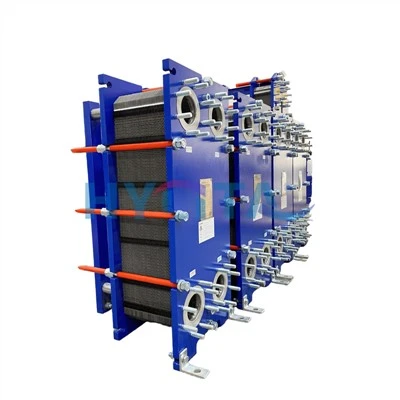
Gasketed plate heat exchangers use high quality gaskets and design to seal plates together and protect against leaks. Plates can easily be removed for cleaning, expansion, or replacing purposes, drastically reducing maintenance costs.
Brazed Plate heat exchangers are used in many industrial and refrigeration applications. Due to stainless steel plate composition with copper brazing, they are highly resistant to corrosion. Brazed Plate heat exchangers are efficient and compact, making them an excellent economic choice.
Welded plate heat exchangers are similar to Gasketed plate heat exchangers, but instead the plates are welded together. They are extremely durable, and are ideal for transferring fluids with high temperatures or corrosive materials. Since the plates are welded together, mechanical cleaning of plates is not an option as with plate and frame heat exchangers.
Semi-Welded plate heat exchangers feature a mixture of welded and gasketed plates. They contain pairs of two plates welded together which are then gasketed to other pairs, therefore one fluid path is welded and the other fluid path is gasketed. This results in a plate heat exchanger that is easy to service on one side and able to transfer more intense fluids on the other.
Performance Parameters
Heat Transfer Coefficient
3000 - 5000 W/(m²·K). The corrugated plate design and turbulent flow result in high heat transfer efficiency, allowing for effective heating or cooling of water in commercial buildings.
Flow Rate
Depends on plate size and configuration. Typically, can handle flow rates from 5 - 500 m³/h for different capacity requirements.
Pressure Rating
Up to 1.6 MPa (subject to design and gasket material; higher pressure ratings available with custom designs).
Temperature Range
Compatible with fluids from - 20°C to 120°C (limited by NBR gasket; alternative gasket materials like EPDM or Viton can extend range for specific applications).
Components of Plate And Frame Heat Exchanger
Plates:
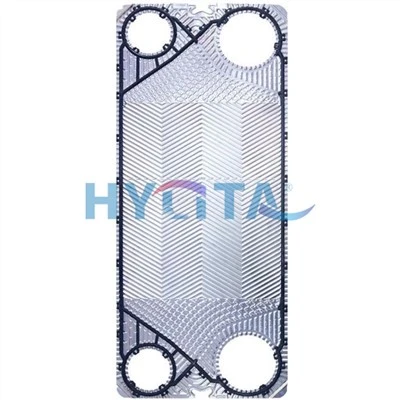
- Description: Thin, corrugated metal plates are the core components. They are typically made of stainless steel, titanium, or other alloys, depending on the application and the fluids being used.
- Function: The plates provide the surface area for heat transfer. The corrugation pattern increases turbulence, enhancing heat transfer efficiency.
Gaskets:
- Description: Seals placed between plates.
- Function: Gaskets ensure that the fluids do not mix and guide the flow of fluids through alternate channels between the plates.
Frame:
- Description: The frame consists of a fixed frame plate, a pressure plate, and sometimes additional clamping bolts.
- Function: The frame holds the plates together in a stack, applying pressure to maintain a seal and allowing for easy disassembly for cleaning or maintenance.
Inlet and Outlet Ports:
- Description: Ports located on the frame or on the plates for the entry and exit of hot and cold fluids.
- Function: These ports direct the fluids into the correct channels between the plates for heat transfer.
Carrying Bar and Guide Bar:
- Description: Structural bars that support and align the plates in the correct position.
- Function: Ensure the plates remain aligned and provide easy access for maintenance by allowing the plates to slide out.
Clamping Bolts:
- Description: Bolts that compress the stack of plates.
- Function: Apply pressure to the plates to create a tight seal between them and ensure efficient heat transfer.
Packaging & Logistics
Packaging
Protected with anti - scratch and shock - absorbing materials. Plates are separated to prevent damage during transit, and the frame is secured in a sturdy crate.
Delivery Time
7 - 17 working days after order confirmation, depending on customization (e.g., plate quantity, gasket material). Shipped via freight carriers suitable for industrial equipment.
We're professional plate and frame heat exchanger manufacturers and suppliers in China, providing high quality customized products with low price. We warmly welcome you to wholesale plate and frame heat exchanger for sale here from our factory.
plate and frame heat exchanger, Shell And Plate Heat Exchanger, Sterilization heat exchanger