


Brazed Plate Heat Exchanger
Your Professional Brazed Plate Heat Exchanger Supplier
Shenzhen Hylita Heat Exchange Equipment Co., Ltd. was established on July 2, 2015, located in Maluan Chuanggu Industrial Park, Jinlong Avenue, Shahu Community, Biling Street, Pingshan District, Shenzhen. The company focuses on the development and sales of refrigeration and heat exchange equipment technology, and also involves fields such as metal processing and component manufacturing.we have always been guided by meeting customer needs, continuously optimizing products and services, and gradually emerging as a promising enterprise in the field of heat exchange equipment.
Why Choose Us
Production Market
Our heat exchanger products are popular in multiple regions around the world, particularly in Southeast Asia where they are highly favored by customers in countries such as Indonesia, Malaysia, and Thailand. Due to the vigorous development of industry in Indonesia, the demand for heat exchangers has surged.
Our Service
Shenzhen Hylita Heat Exchange Equipment Co., Ltd. has established a full process service system to provide customers with professional and thoughtful support.
Our Factory
Shenzhen Hylita Heat Exchange Equipment Co., Ltd. is located in Guangdong, China, with a spacious factory of nearly 4000 square meters. There are currently 45 workers, and the annual production equipment requires over 20 million tons of metal materials.
On-Time Delivery
Our supply chain management and production processes operate efficiently to ensure your orders are delivered punctually.
Product Description
|
Capacity range |
0.1m3/h to 300m3/h |
|
Operating pressure |
≤4.5MpaG |
|
Operating temperature |
≤250℃ |
|
Plate material |
Stainless steel 304/316 l |
Advantages of Brazed Plate Heat Exchanger
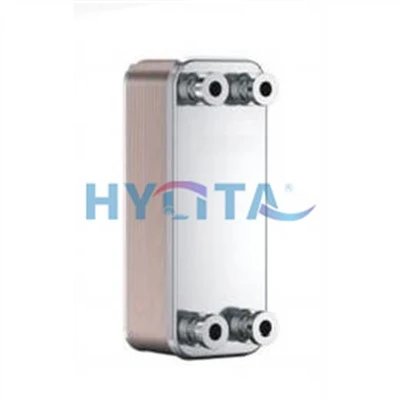
High corrosion resistant
All plates uses SUS316 material. Brazing materials come in copper or nickel versions. These materials offer high corrosion resistance against a variety of fluids.
High pressure resistant
Thanks to the brazing process, plate heat exchangers are pressure resistant up to 45 bar.
High thermal efficiency
Carefully designed plate pattern of the corrugated plates easily achieves high thermal transfer rate in either counter flow or parallel flow arrangement.
High working temperature
Brazed Plate Heat Exchanger's SUS316 material structure offers higher working temperature range up to 200℃.
Compactness
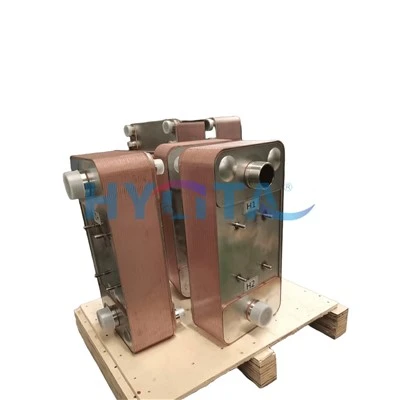
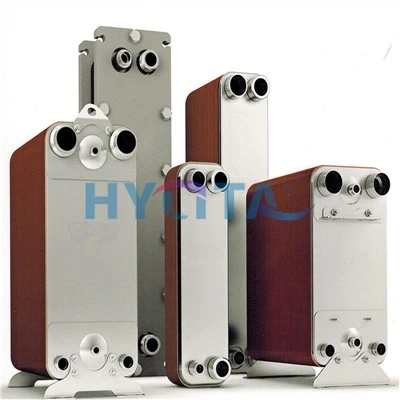
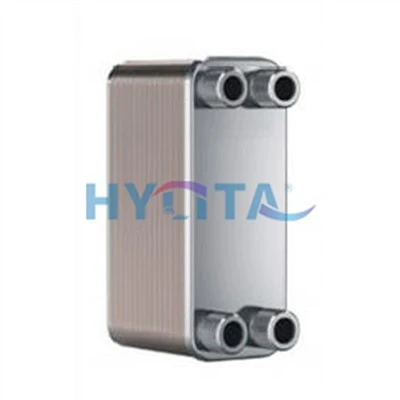
Brazed Plate Heat Exchanger is much lighter in weight and smaller in size, if compared to shell tube exchangers; about 1/5 the size of the shell tube exchanger of the same capacity. This advantage makes Brazed Plate Heat Exchanger easier to install and replace.
Low maintenance
The corrugated plates are designed to achieve turbulence flow at a low flow rate, thus decreasing the need for frequent maintenance.
Working Principle of Brazed Plate Heat Exchanger
Fluid Inlets and Outlets
Two fluids enter the exchanger from opposite sides.
01
Alternating Flow Channels
The fluids pass through alternating channels between the brazed stainless steel plates.
02
Corrugated Plate Design
The corrugated plates create turbulence, which increases thermal performance by maximizing contact and improving heat transfer.
03
Counter-Flow Arrangement
Fluids typically flow in opposite directions (counter-flow), which enhances thermal efficiency.
04
Heat Exchange
Heat is transferred from the hotter fluid to the cooler one across the thin stainless steel plate walls.
05
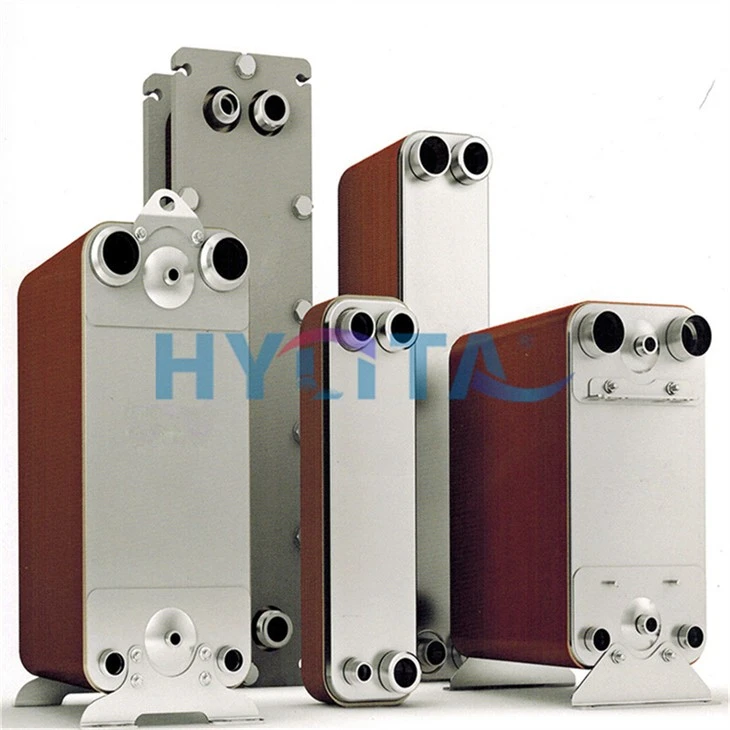
Spiral plate heat exchanger
It is rolled by two parallel metal plates with a certain distance, and the cold and hot fluids flow in the spiral channels on both sides of the metal plates respectively.
Plate heat exchanger
It is composed of a certain shape of corrugated sheet and sealing gaskets alternately superimposed, and assembled by clamping with a frame. The cold and hot fluids flow through the flow channels on both sides of the corrugated plate respectively, and exchange heat through the plates.
Plate-fin heat exchanger
It consists of a bundle of heat exchange plates enclosed in a header box with inlet and outlet for cold and hot fluids. The plate bundle is formed by alternately overlapping flat plates and corrugated fins and brazing. The cold and hot fluids flow through the two sides of the plate for heat exchange, and the fins increase the heat transfer area, promote the turbulence of the fluid, and enhance the equipment.
- Plate heat exchanger plate
- Plate heat exchanger sealing gasket
- Fixed compression plate
- Movable compression plate
- Clamping bolt
- Upper guide
- Lower guide
- Rear pillar
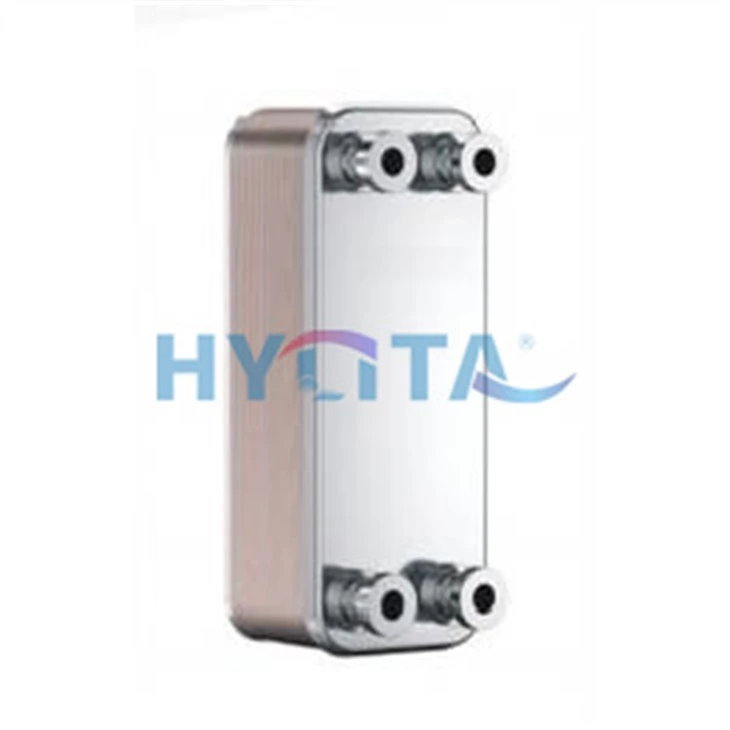
Application of Brazed Plate Heat Exchanger
Chemical industry
Soda ash industry, ammonia synthesis, alcohol fermentation, resin synthesis cooling, etc.
Metallurgical industry
Heating or cooling of aluminate mother liquor, cooling of steelmaking process, etc.
Machinery industry
Cooling of various quenching fluids, cooling of reducer lubricating oil, etc.
Electric power industry
Oil cooling of high voltage transformers, oil cooling of generator bearings, etc.
Paper industry
Heat recovery of bleaching process, heating of washing liquid, etc.
Textile industry
Cooling of viscose silk alkali aqueous solution, cooling of boiling nitrocellulose, etc.
Food industry
Fruit juice cooling, animal and vegetable oil heating and cooling, etc.
Grease process
Soap-based atmospheric drying, heating or cooling various process liquids.
We're professional brazed plate heat exchanger manufacturers and suppliers in China, providing high quality customized products with low price. We warmly welcome you to wholesale brazed plate heat exchanger for sale here from our factory.
Chiller Brazed Plate Heat Exchanger, plate heat exchanger, Titanium Brazed Plate Exchanger