


Heat Recovery Unit
Your Professional Heat Recovery Unit Supplier
Shenzhen Hylita Heat Exchange Equipment Co., Ltd. was established on July 2, 2015, located in Maluan Chuanggu Industrial Park, Jinlong Avenue, Shahu Community, Biling Street, Pingshan District, Shenzhen. The company focuses on the development and sales of refrigeration and heat exchange equipment technology, and also involves fields such as metal processing and component manufacturing.we have always been guided by meeting customer needs, continuously optimizing products and services, and gradually emerging as a promising enterprise in the field of heat exchange equipment.

Why Choose Us
Production Market
Our heat exchanger products are popular in multiple regions around the world, particularly in Southeast Asia where they are highly favored by customers in countries such as Indonesia, Malaysia, and Thailand. Due to the vigorous development of industry in Indonesia, the demand for heat exchangers has surged.
Our Service
Shenzhen Hylita Heat Exchange Equipment Co., Ltd. has established a full process service system to provide customers with professional and thoughtful support.
Our Factory
Shenzhen Hylita Heat Exchange Equipment Co., Ltd. is located in Guangdong, China, with a spacious factory of nearly 4000 square meters. There are currently 45 workers, and the annual production equipment requires over 20 million tons of metal materials.
On-Time Delivery
Our supply chain management and production processes operate efficiently to ensure your orders are delivered punctually.

Energy Efficiency: Heat exchangers are champions of energy conservation, significantly reducing energy consumption and costs. They achieve this by capturing and repurposing heat from one process for another. For instance, they can harness heat from a boiler or furnace exhaust gases to preheat incoming air or water, minimizing the need for additional fuel, and increasing system efficiency.
Environmental Sustainability: By curbing greenhouse gas emissions and pollutants, heat exchangers contribute to environmental protection. Their ability to recover waste heat reduces the amount of fuel burned, subsequently diminishing the release of carbon dioxide and other harmful substances into the atmosphere.
Process Enhancement: Heat exchangers are invaluable in optimizing heating processes. They maintain ideal temperature and pressure conditions for various operations, ensuring higher product yields and improved quality. For example, they can regulate the temperature of chemical reactions or fermentation processes, yielding superior results.
Types of Exhaust Heat Exchanger
Gasketed Plate Heat Exchangers (GPHEs): These modular units are built for flexibility and maintainability. You can open them up, clean the plates, replace gaskets, and scale the system as your needs change. Ideal for industries where uptime is crucial but fouling is a risk—like chemical, marine, and HVAC.
Welded Block Heat Exchanger: This fully welded, compact unit handles aggressive fluids and high temperatures without the need for gaskets. It’s perfect when you need a durable, low-maintenance option in extreme environments like petrochemicals, offshore platforms, or demanding process industries.
Shell and Plate Heat Exchanger: A hybrid of traditional shell-and-tube and plate designs, these units deliver high pressure and thermal efficiency in a smaller footprint. They're used where compactness and reliability are non-negotiable.
Shell and Tube: These beasts handle high pressure and temperature. You’ll find them in power plants, refineries, and chemical processing – anywhere rugged reliability is non-negotiable.
Exhaust gas enters the exchanger
Combustion processes create hot exhaust gases with high thermal energy.
These gases are directed into the heat exchanger, often through a series of metal tubes.
Heat is transferred from exhaust to the secondary medium
The hot exhaust gases flow through the tubes.
The secondary medium (e.g., air, water, or coolant) flows around the outside of the tubes.
Conduction: is the primary method of heat transfer: the hot gas molecules collide with the cooler metal, transferring energy to the tube material.
This energy is then transferred from the tube to the secondary fluid, which is often designed to have a higher surface area through fins to improve efficiency.
Secondary medium is heated
The heat absorbed from the exhaust gases raises the temperature of the secondary medium, like water or air.
In some cases, the exhaust gases are cooled below their dew point, causing water vapor to condense and release its latent heat, further increasing the energy recovered (known as a condensing heat exchanger).
Cooled exhaust gases exit
After the heat has been extracted, the now-cooler exhaust gases exit the heat exchanger and are vented, typically through an exhaust flue or stack.
The cooled exhaust reduces the thermal energy released into the atmosphere.
Recovered heat is used
The heated secondary medium is transported to where the recovered heat is needed.

Applications of Exhaust Heat Exchanger
Process Heat: Industries like manufacturing, refining, and mining rely on process heat for their operations. Heat exchangers transfer heat from hot fluids to cold ones or from hot solids to fluids.
Food and Beverage: In this sector, heat exchangers perform tasks such as pasteurization, sterilization, cooking, cooling, freezing, and drying. They maintain precise temperatures and prevent contamination, ensuring food safety and product quality.
Pharmaceutical and Biotechnology: Heat exchangers are indispensable in processes like fermentation, distillation, crystallization, extraction, and purification. They uphold the optimal conditions required for these reactions, enhancing production and product quality.
HVAC (Heating, Ventilation, and Air Conditioning): Buildings such as offices, hotels, hospitals, and schools rely on HVAC systems to maintain indoor comfort and air quality. Heat exchangers are essential components, transferring heat between air and water or air and refrigerant.
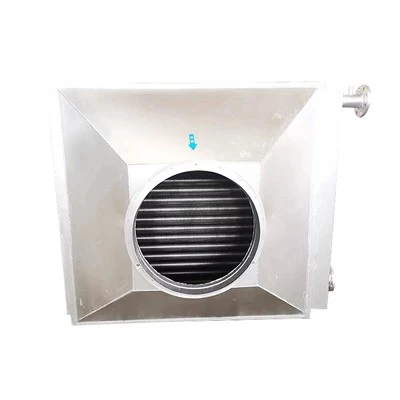
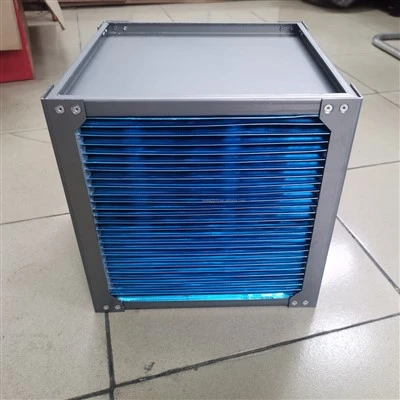
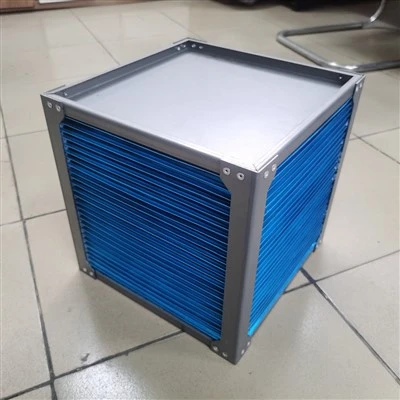
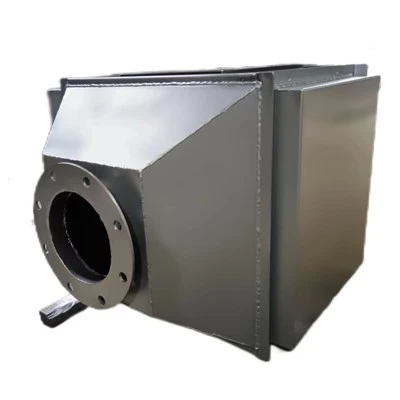
We're professional heat recovery unit manufacturers and suppliers in China, providing high quality customized products with low price. We warmly welcome you to wholesale heat recovery unit for sale here from our factory.
Air Preheater And Economiser, economizer heat exchanger, Exhaust Heat Exchanger