



Parallel Flow vs Counter Flow vs Crossflow Heat Exchangers: Selection Guide, Efficiency & Application Limits
Flow pattern gets decided on thermal efficiency first. Pressure drop, thermal stress, fouling, corrosion and cleaning arrive later, as constraints to work around. That order costs money. By the time the baffle layout and port arrangement are fixed, the pattern is hard to change, and a poor match shows
up for years: shorter equipment life, higher running cost, and under chloriderich hightemperature service, rouging or pitting at the hot spots.
This guide compares parallel, counter and crossflow designs as they appear in plate, shell and tube, finned tube and dry cooler hardware - what each pattern does well, where it fails, qualitative benchmarks for screening, and the material rules that go with corrosive media, titanium and duplex steel.
> Note: the comparisons below are preliminary selection references only. Final thermal, mechanical and corrosion validation still requires thermal calculation, stress review and a material compatibility check against TEMA and the relevant process standards.
What Are Parallel, Counter and Crossflow Flow Patterns in Heat Exchangers
Flow pattern describes the relative direction of the hot and cold streams. Each arrangement produces predictable flow behaviour, but each fits a narrower band of hardware and process limits than selection sheets usually admit.
Parallel Flow (Cocurrent Flow): Definition & Working Principle

Hot and cold fluid enter at the same end and leave at the other, travelling in the same direction the whole way. Because the two temperature profiles converge toward the outlet, the driving force there is small, which is why LMTD is lowest for this pattern. Shell and tube units use it most; plate exchangers use it occasionally where stress limits dominate. Dry coolers almost never do, since airside heat rejection is naturally crossflow.
Counter Flow (Countercurrent Flow): Definition & Working Principle
The streams enter at opposite ends and move toward each other. On most duties this gives the largest LMTD of the three patterns, and it is the main reason liquidliquid process service defaults to it. Plate, shell and tube, and finned tube designs all support counterflow.
Crossflow Heat Exchanger: Definition & Working Principle
One stream crosses the other, usually at right angles. In most real installations one side is liquid and the other ambient air, which makes crossflow the standard layout for dry coolers and aircooled finned tube units. Plate exchangers rarely use it for continuous liquid duty; compact crossflow plate variants exist, but they stay in lowfouling niches.
Table note: ratings are qualitative, relative rankings for initial screening. Actual values depend on baffle arrangement, velocity, fouling layer, fluid properties and equipment geometry.
Comparison Table: Parallel / Counter / Crossflow
| Metric | Parallel Flow | Counter Flow | Crossflow |
| Heat transfer efficiency | Low | High | Medium |
| LMTD | Lowest | Highest | Medium |
| Pressure drop | Medium | Medium-High | Medium |
| Thermal stress | Low | High | Medium |
| Fouling risk | Medium | Medium | Medium-High |
| Cleaning difficulty | Easy | Medium | Hard |
| Fabrication & operating cost | Medium | Medium | Medium-High |
| Best for | Low delta T, stress-sensitive service
|
General process, high heat demand, most corrosive fluid with proper material | Air cooling, condensation, dry coolers |
Read the thermal stress row together with the efficiency row. Counterflow's advantage is bought with stress, and on corrosive streams that trade is what decides the material, not the duty margin.
Pros & Cons of Each Flow Pattern
The weaknesses of each pattern surface in different places: stress in the tubes, energy at the pump, deposits in the dead zones.
Parallel Flow Heat Exchanger Advantages and Limitations
Wall temperature stays more evenly distributed along the length, so thermal stress is low. That is why parallel flow gets chosen on units that cycle in temperature frequently. The cost is capacity. Low LMTD means more area for the same duty, and a true temperature cross is impossible - the cold outlet can never pass the hot outlet. When equipment life and stress control matter more than heat duty, parallel flow earns its place; when heat transfer is the project target, it rarely does. [Internal link: fouling prevention article]
Counter Flow Heat Exchanger Advantages and Limitations
Counterflow gives the highest LMTD and the best thermal efficiency, and it handles wide differences between hot and cold streams - the reason it covers most industrial heating and cooling duties. The penalty is thermal stress on the heat transfer wall. In chloridecontaining service, that hot wall is exactly where rouging and pitting begin on standard austenitic stainless steel, so counterflow in those duties needs titanium or duplex construction that tolerates local hot spots. [Internal link: rouging article, corrosion resistant heat exchanger]
Crossflow Heat Exchanger Advantages and Limitations
For airliquid exchange, crossflow fits. The geometry suits finned tube bundles and dry coolers used for condensation and heat rejection to ambient air, and efficiency lands between parallel and counterflow. It is a poor choice for sealed corrosive chemical fluids: staggered channels create dead zones that hold contaminants, and corrosion starts there. Lowfouling, noncorrosive liquid crossflow is possible, but uncommon in process cooling. [Internal link: finned tube heat exchanger]
How to Select Flow Pattern By Your Process Condition
Four constraints usually settle the choice - process temperatures, fluid properties, pressure budget and hardware type. Efficiency ranking alone will not.
Selection for High Temperature & High Delta T Process
With a large temperature difference between streams, start with counterflow: it holds LMTD high with the least area. When the delta T reaches the point where thermal stress and fatigue become the governing risk, parallel flow flattens the wall temperature and accepts the lower duty in exchange for life. Flow pattern sets the cyclic stress that, more than any other single choice at this stage, defines service life in highheat duty. [Internal link: waste heat recovery]
Selection for Corrosive Fluid, Seawater & Chloride Service
Seawater, brine and chloriderich chemical fluids carry real corrosion risk. Counterflow still wins on heat transfer, but its thermal stress intensifies rouging and pitting on regular stainless steel. Pair the pattern with titanium or duplex rather than downgrading to a weaker layout. Avoid complex crossflow for corrosive liquid service: dead corners collect deposits and local corrosion follows. This pairing is the one most often missed - flow pattern and material have to be evaluated as a single decision. [Internal link: seawater heat exchange, chemical process cooling]
Selection for Phase Change: Condensation / Evaporation
Condensation and evaporation pull in opposite directions. Aircooled condensation, the kind inside a dry cooler, is crossflow work. Evaporation runs better on counterflow, which keeps temperature matching and stability. Parallel flow suits neither well; the limited LMTD struggles to hold a stable phase transition, and it only works for very mild, lowload duties in special skid designs. [Internal link: air compressor cooling]
Selection for High Viscosity, Easy Fouling Fluid
Viscous and foulingprone media need steady velocity and few dead zones. Counterflow keeps distribution uniform. Complex crossflow baffling traps sludge and solids. Parallel flow is defensible when CIP is scheduled regularly, because fouling lays down evenly and flushes out more easily.
Selection Based on Allowable Pressure Drop
Pressure drop is the constraint that gets audited last and hurts first. Counterflow arrangements often need longer flow paths or tighter baffling, and the pump pays for both. Where pump head is limited, parallel or simplified crossflow layouts may be the only workable option even with a worse LMTD. Fix the pressure budget alongside heat duty and corrosion requirements, before the layout is drawn. [Internal link: material selection guide]
Flow Pattern Matching for Plate / Shell & Tube / Finned Tube / Dry Cooler
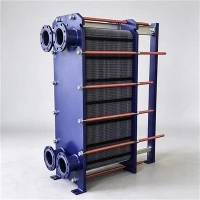
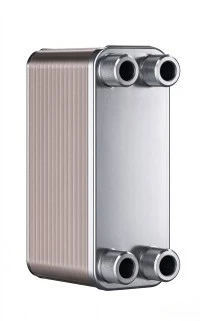
Plate heat exchanger: counterflow in nearly all units; channels are built for opposing flow
Shell and tube heat exchanger: counterflow by default, parallel flow for stresslimited cases
Finned tube heat exchanger: counterflow, or counterflow combined with crossflow sections
Dry cooler: crossflow as the primary layout [Internal link: plate heat exchanger, shell and tube heat exchanger, finned tube heat exchanger, dry cooler]
Common Combined Flow Patterns in Industrial Heat Exchangers
Large or demanding duties rarely run a single pure pattern. Hybrid layouts trade a little efficiency for mechanical margin.
Multipass Counter + Parallel Hybrid Design
Multipass shell and tube exchangers commonly work this way. Front passes run counterflow for heat transfer; later sections switch to parallel to cut peak thermal stress. It is the usual answer for highflow, hightemperature process cooling where duty and fatigue life both have to hold. [Internal link: custom heat exchanger]
Crossflow + Counterflow Hybrid for Air Cooled Dry Coolers
Most commercial dry coolers are crossflow with partial counterflow zoning to lift LMTD. The air side stays simple, and nothing in the bundle becomes hard to clean. [Internal link: dry cooler]
Mistakes Engineers Often Make When Choosing Flow Pattern
- Optimising for efficiency, then meeting the pressure drop at commissioning. Counterflow's LMTD can cost more pump energy than the duty justifies.
- Mismatching pattern and material: counterflow plus 304/316L in chloride service invites rouging and pitting on the hot wall.
- Forgetting CIP. Crossflow with dense baffling holds sediment and will not pass a sanitary clean.
- Expecting parallel flow to solve a heat shortage. It lowers stress; it does not add capacity.
- Specifying counterflow without checking existing pump capacity. [Internal link: rouging article]
Quick Decision Checklist: Pick the Right Flow Pattern
- Confirm hot and cold inlet and outlet temperature delta
- Mark fluid type: clean water, seawater, chloride chemical, viscous oil, phasechange media
- Check fouling tendency and the cleaning method it requires (CIP or manual)
- Set the allowable pressure drop limit and available pump head
- Confirm exchanger type: plate, shell and tube, finned tube or dry cooler
- Check material specification: SS316L, duplex steel or titanium
- Default: counterflow for most liquidliquid process, crossflow for air cooling, parallel flow only for stresslimited low delta T cases
That checklist covers preliminary selection. Corrosive or hightemperature critical service still needs thermal stress and material compatibility verified. Our full heat exchanger selection datasheet has the calculation references; if you want thermal calculation and a custom flow pattern design, send your process parameters.
Case Study: Flow Pattern Selection for Corrosive Chemical Process
A chemical plant needed a heat exchanger for a chloridecontaining process fluid at 128°C, carrying roughly 16,000 ppm chloride - enough to put standard stainless steel at rouging risk. The engineering team hit a conflict. Counterflow met the 1.2 MW duty, but its thermal stress would accelerate rouging. Parallel flow controlled the stress, but could not reach the duty inside the available footprint. The solution was counterflow in a titanium shell and tube exchanger: titanium resists chloride even at the elevated local wall temperatures counterflow produces, so the layout carried the thermal demand and the material removed the rouging risk. The unit has run stably since commissioning, with less unplanned downtime. If you are working on similar corrosive process cooling, share your process data for a matched flow and material proposal. [Internal link: chemical process cooling case]
FAQ
Q: Is counterflow always better than parallel flow heat exchanger?
A: No. Counterflow is more efficient, but it creates higher thermal stress. Parallel flow wins when thermal fatigue risk is the main concern, even at lower heat transfer.
Q: Can crossflow design be used for corrosive chemical fluid?
A: Generally no. Staggered flow paths create dead zones where corrosive deposits collect. Crossflow belongs on the air side. Optimised lowdeadspace crossflow designs exist for mild, lowfouling corrosive streams, but they are rare. [Internal link: corrosion resistant heat exchanger]
Q: What flow pattern is best for plate heat exchangers?
A: Counterflow, in almost every unit. Plate channels are shaped for opposing flow so LMTD is maximised in a small envelope. Parallel flow plate units are available for stresssensitive duties. [Internal link: plate heat exchanger]
Q: How does flow pattern affect fouling and rouging risk?
A: It changes wall temperature distribution and flow velocity. Counterflow's thermal stress speeds rouging in chloride service. Crossflow dead zones collect fouling. Parallel flow lays fouling down evenly, which makes it easier to flush. [Internal link: rouging article]
Q: What is the difference between LMTD of parallel and counter flow?
A: For the same inlet and outlet temperatures, counterflow gives a much higher LMTD. Parallel flow hits the lowest LMTD limit of the three, so it cannot reach the same heat transfer under identical boundary conditions.
Q: Which flow pattern is suitable for dry cooler / air cooled heat exchanger?
A: Crossflow primary, often with partial counterflow optimisation. Air crosses the tube bundle perpendicularly.
Q: Does flow pattern affect cleaning and CIP operation?
A: Yes. Parallel flow and simple counterflow flush more easily. Crossflow with dense baffling traps more sediment and needs longer cleaning cycles.
Q: Can I change flow pattern of an existing heat exchanger?
A: Rarely. Baffles, port arrangement and channel design define the pattern, so a change means rework or new fabrication.
Q: How does flow pattern influence pumping cost via pressure drop?
A: Counterflow configurations tend to carry higher pressure drop. On a site with limited pump head, that energy penalty can outweigh the thermal gain.
Custom Heat Exchanger Design For Your Process Requirements
We design custom heat exchangers around the flow pattern your duty needs - parallel, counter, crossflow or a multipass hybrid - in SS316L, duplex steel or titanium for hightemperature, seawater and corrosive chemical service. Scope covers thermal calculation, flow pattern optimisation, material selection, and OEM & ODM fabrication. Send temperature, fluid medium, pressure and corrosion requirements, and we will return a matched heat transfer scheme and quotation. [Internal link: request a custom quote, contact page]