


What process conditions are suitable for shell-and-tube heat exchangers?
This article discusses the selection principles and optimization strategies for shell-and-tube heat exchanger process conditions from three aspects: temperature, pressure drop, and fluid space, combined with engineering case studies.

A shell-and-tube heat exchanger consists of a tube bundle and a shell. Hot and cold fluids flow through the tube side and shell side respectively, exchanging heat through the tube wall. Its high heat transfer coefficient, diverse structural forms, and mature manufacturing processes make it the most widely used heat exchange equipment in industrial production.
Practice shows that the performance of shell-and-tube heat exchangers depends not only on structural parameters but also on process conditions. Different combinations of temperature, pressure, and flow rate lead to significantly different heat transfer enhancement effects and hydraulic resistance characteristics. Therefore, selecting appropriate process conditions based on specific operating conditions is crucial for reducing equipment investment, saving operating energy, and improving system reliability.
1. Introduction
This paper focuses on three core process parameters: temperature, pressure drop, and fluid space. Through engineering case studies, it systematically elaborates the selection basis and optimization methods for shell-and-tube heat exchanger process conditions, aiming to provide useful references for related engineering design and technical transformation.

2. Selection Principles for Heat Transfer Temperature Difference
2.1 Impact of Temperature Difference on Heat Exchanger Design
For shell-and-tube heat exchangers, the log mean temperature difference (LMTD) is a decisive parameter for heat transfer capacity and size. Under a given heat load, a larger LMTD requires a smaller heat transfer area, and vice versa. Therefore, the selection of LMTD largely determines the design type and investment cost of the heat exchanger.
At the same time, inappropriate temperature difference can also cause operational problems. Too small a temperature difference leads to insufficient heat transfer and reduced product quality; too large a temperature difference exacerbates fouling and corrosion, shortens equipment life, and wastes energy quality. Therefore, the temperature difference should be reasonably selected based on a comprehensive consideration of heat transfer performance, equipment economy, and system stability.
2.2 General Selection Range for Temperature Difference
The temperature difference for shell-and-tube heat exchangers is typically determined by fluid properties, equipment use, process requirements, etc., with no universal standard. However, engineering design generally follows these empirical ranges:
- For conventional liquid-liquid heat exchangers: LMTD is generally 5–20°C. Viscous liquids with lower heat transfer coefficients may allow a larger temperature difference.
- For low-temperature fluids such as chilled water: LMTD should be controlled at 3–8°C to avoid frosting.
- For high-temperature fluids such as molten salt or molten metal: LMTD can be relaxed to 30–50°C for compact design.
- For phase-change heat transfer such as vaporization and condensation: LMTD is generally small, between 3–10°C.
- For gas-liquid heat exchange: LMTD should be relatively large, typically 25–40°C, to compensate for the lower heat transfer coefficient on the gas side.
These ranges provide a reference for engineering design but should be flexibly adjusted according to specific conditions.
2.3 Engineering Case: Optimizing Temperature Difference
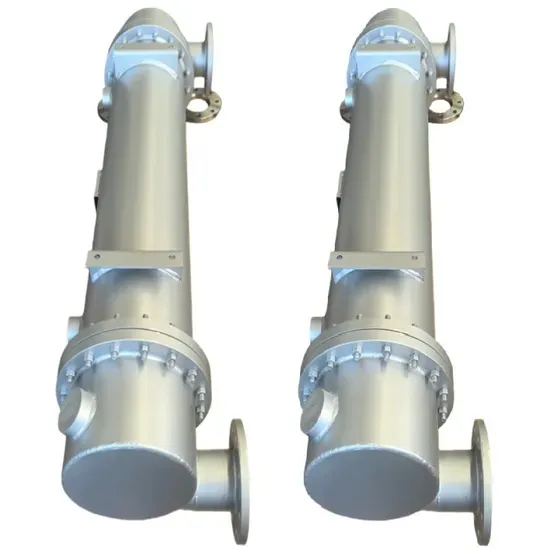
Take the overhead condenser of a crude distillation unit in a petrochemical plant as an example. This condenser uses raw oil as the cooling medium to condense tower top vapor. In the conventional design, the inlet-outlet oil temperature difference was 25°C, shell-side pressure drop controlled within 0.05MPa, and condensation temperature maintained at 190°C. After years of operation, severe coking inside the condenser led to frequent cleaning cycles and high energy consumption.
Engineers proposed an optimization: increase the oil-side temperature difference from 25°C to 35°C, and raise the allowable shell-side pressure drop to 0.1MPa. While keeping the condensation temperature unchanged, enhanced heat transfer tubes were used to reduce the heat transfer area. After the retrofit, the heat transfer coefficient increased by 20%, equipment volume decreased by 30%, annual operating costs were reduced by RMB 150,000, and cleaning cycles were significantly extended.
This case shows that moderately increasing the temperature difference, combined with equipment optimization, can significantly improve heat transfer performance and reduce investment and operating costs. However, blindly expanding the temperature difference may cause fluid temperature crossover and excessive thermal stress, requiring comprehensive analysis and verification during the design phase.
3. Reasonable Control of Pressure Drop
3.1 Impact of Pressure Drop on Heat Exchanger Performance
The pressure drop in shell-and-tube heat exchangers consists of tube-side and shell-side components. Excessive pressure drop increases pumping power, resulting in additional energy consumption; too little pressure drop leads to uneven fluid distribution, insufficient heat transfer, and fouling in hot spots. In addition, pressure drop fluctuations can cause frequent system adjustments, affecting production safety and stability. Therefore, it is necessary to reasonably control the pressure drop level during the design phase.
3.2 General Pressure Drop Control Ranges
- For conventional liquid media: Tube-side pressure drop should be controlled at 30–40 kPa.
- For high-viscosity liquids: Tube-side pressure drop can be relaxed to 100 kPa, while shell-side pressure drop should be strictly kept within 50 kPa.
- For gas media: Tube-side pressure drop should not exceed 2–3 kPa to minimize temperature changes caused by pressure drop.
- For vacuum heat exchangers: Pressure drop should be as small as possible, generally within 1 kPa.
- For high-temperature and high-pressure heat exchangers: Considering tube wall pressure-bearing capacity, pressure drop can be moderately relaxed but still controlled within 100 kPa on the tube side and 50 kPa on the shell side.
These control values are provided as a basis for preliminary design, but optimization should be carried out according to specific production processes and equipment layout.
3.3 Engineering Case: Optimizing Pressure Drop with Plate Redistribution Technology
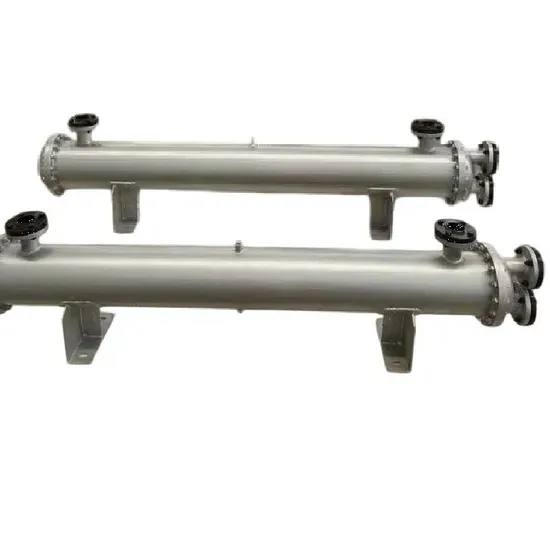
Take the feed heat exchanger of an ethylene cracking furnace as an example. In the conventional design, tube-side cracking gas pressure drop was 60 kPa, shell-side steam pressure drop was 30 kPa. During operation, uneven distribution on the tube side led to local high tube wall temperatures and high pump power consumption.
To solve these problems, engineers installed redistribution plates on the shell side, dividing the shell-side flow into several streams to reduce radial flow non-uniformity. At the same time, buffering devices were installed in the tube channel to adjust inlet flow rates for different tube passes. After the retrofit, the maximum tube-side pressure drop dropped to 45 kPa, shell-side pressure drop to 20 kPa, temperature uniformity improved by 15%, and annual electricity savings reached 2 million kWh.
This case shows that using enhanced heat transfer technologies such as plate redistribution can significantly improve fluid distribution and heat transfer efficiency without increasing pressure drop. Attention should also be paid to the impact of plate arrangement on disassembly and to preventing scaling between plates to ensure safe long-term operation.
4. Optimal Configuration of Fluid Space
4.1 Impact of Fluid Space on Heat and Mass Transfer
In addition to tube and shell side pressure drops, the spatial distribution of fluid within the heat exchanger significantly affects heat and mass transfer performance. The fluid space of a shell-and-tube heat exchanger mainly includes tube-side cross-sectional area, shell-side flow channel area, and tube channel volume.
Reasonable fluid space design can enhance turbulence, promote liquid film renewal and boundary layer breakup, thereby greatly improving the convective heat transfer coefficient. In contrast, excessive fluid space reduces flow velocity, causing temperature stratification and deteriorated heat transfer; overly narrow flow channels increase frictional resistance and waste pump power. In addition, unreasonable tube and shell side configurations may lead to dead zones and gas retention, affecting heat transfer uniformity and system safety. Therefore, optimizing fluid space configuration is key to improving shell-and-tube heat exchanger performance.
4.2 General Design Principles for Fluid Space
- Tube-side flow velocity: Should be controlled at 1.0–2.5 m/s. Higher values for liquids, lower for gases.
- Shell-side cross-sectional flow velocity: Should be controlled at 0.4–1.2 m/s. Can be moderately increased for compact structures.
- Tube channel diameter to tube outer diameter ratio: Should be 1.25–1.5. Too large creates dead zones, too small hinders tube layout.
- Tube bundle center distance to tube outer diameter ratio: Should be greater than 0.25. Too small restricts cross-flow on the shell side.
- Shell-side flow channel width to tube outer diameter ratio: Should be 0.4–0.6. Too narrow increases frictional resistance.
- Tube inner diameter to outer diameter ratio: Should be above 0.8. Too small increases flow resistance and temperature difference.
These design principles are based on extensive successful experience and can guide engineering design to quickly focus on reasonable ranges, reducing blind trial and error. For special conditions, extensive analysis and optimization iterations are still needed.
4.3 Engineering Case: Multi-Stage Series Technology for Gas-Liquid Two-Phase Flow
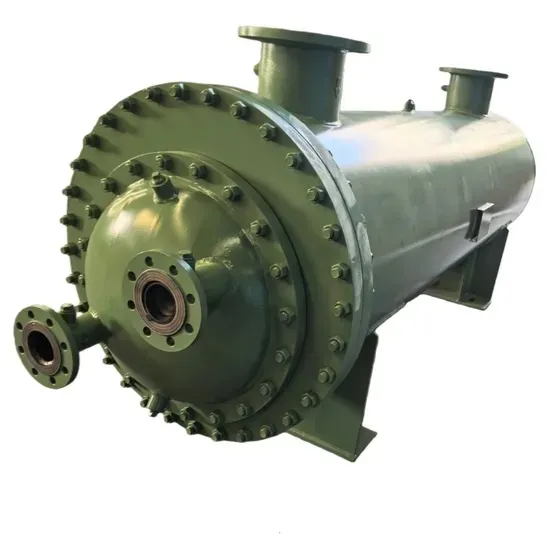
Take an LNG vaporizer as an example. Conventional vaporizers use shell-side water bath heating, which suffers from large temperature differences and high energy consumption. To achieve cascade utilization of the vaporization process, engineers proposed a multi-stage series vaporizer design.
The improved vaporizer consists of three series-connected shells. LNG is heated and vaporized step by step on the tube side, while hot water flows counter-currently on the shell side of adjacent stages. In the high-temperature section, a cross-flow structure is used with tube outer diameter 25 mm and tube pitch 35 mm; in the low-temperature section, a baffle-type structure is used with tube outer diameter 15 mm and tube pitch 30 mm. After optimization, the heat transfer temperature difference was reduced by 8°C, the vaporization rate increased by 12%, and operating costs decreased by 20%.
This case demonstrates that adopting different tube arrangements and bundle sizes according to gas-liquid two-phase flow characteristics can significantly enhance heat transfer. Series arrangement allows cascade utilization of heat at different temperature levels, reducing irreversible losses. Multi-stage design also expands operational flexibility, enabling combined optimization of hot and cold fluids to maximize overall energy efficiency while meeting end-use energy quality requirements.
5. Conclusions
The selection of process conditions for shell-and-tube heat exchangers directly affects heat transfer performance, investment cost, and operating efficiency.
This paper discusses in detail the selection principles and optimization strategies for shell-and-tube heat exchanger process conditions from three aspects: heat transfer temperature difference, pressure drop, and fluid space. Through a combination of theoretical analysis and engineering case studies, it reveals the intrinsic mechanisms by which process parameters affect heat exchanger design and operation. The main conclusions are as follows:
- The selection of heat transfer temperature difference must balance heat transfer performance and equipment economy. A reasonable temperature difference reduces heat transfer area and investment cost, while an excessive or insufficient temperature difference causes heat transfer and operational problems. Engineering design should flexibly select within recommended ranges based on fluid properties and equipment use.
- Pressure drop control should balance pumping power consumption and heat transfer uniformity. Excessive pressure drop increases pump power loss, while too little pressure drop leads to local heat transfer deterioration. Design should reasonably determine tube and shell side pressure drop levels based on flow media and system conditions. Enhanced heat transfer technologies such as plate redistribution can improve fluid distribution without increasing resistance.
- Optimizing fluid space configuration is key to enhancing heat transfer. Reasonable design of tube and shell side cross-sectional areas and flow channel widths significantly promotes turbulence and thins boundary layers, but overly narrow channels increase frictional losses. Multi-stage series design expands the freedom of fluid space optimization, enabling cascade utilization of heat.
- The optimization of process conditions for modern shell-and-tube heat exchangers has become a systems engineering problem that requires balancing multiple objectives including thermal, hydraulic, strength, and economic factors. The integration of emerging technologies such as big data and artificial intelligence with heat transfer science will further expand the depth and breadth of process optimization.

Consult Us for Custom Shell-and-Tube Heat Exchanger Solutions
If you have any shell-and-tube heat exchanger customization needs, our engineers are ready to assist. We support international orders and OEM projects!
🏢 Company: Shenzhen Hylita Heat Exchanger Co., Ltd.
💬 WhatsApp/WeChat: +86 187 1771 1249
✉️ Email: info@hylita.com