Working principle and classification of steam heat exchanger
Steam heat exchanger is a device that uses steam as a heat source and transfers the thermal energy in the steam to water or air through heat exchange. It is widely used in industrial production, urban central heating and civil construction and other fields. It is a high-efficiency and energy-saving equipment.

🔥 Working Principle
The core principle of a steam heat exchanger is the spontaneous transfer of heat from a high-temperature object to a low-temperature object. High-temperature steam and low-temperature fluid (such as water) that need to be heated exchange heat within the equipment to heat the fluid. According to the different heat exchange methods, it is mainly divided into the following two types:
1. Indirect heat exchange (partitioning wall type)
Steam and heated fluid flow in the space separated by solid walls (such as metal pipe walls, plates) without contacting each other. Heat is transferred from the steam to the fluid through the walls. Common types include:
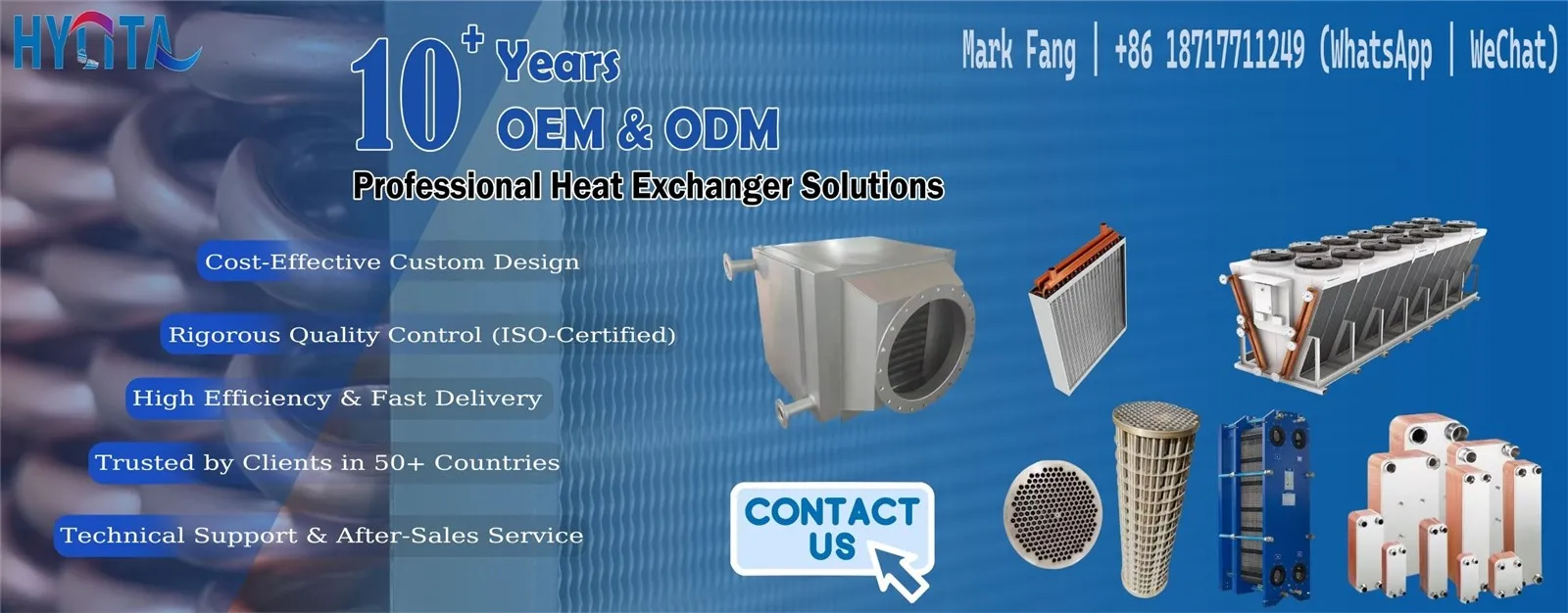
- Tube and tube heat exchangers: High-temperature steam flows on the shell side, low-temperature water flows on the tube side, and heat is transferred through the tube wall.
- Plate heat exchanger: The flow channel is formed by corrugated metal plates, and the fluid flows between the plates for heat exchange, with high efficiency.
- Plate-shell heat exchanger: It combines the high efficiency of plate heat exchangers and the pressure resistance advantages of shell-and-tube heat exchangers, and is suitable for high temperature and high pressure working conditions.

2. Direct heat exchange (mixed type)
Steam and the heated fluid are in direct contact and mixed, thereby quickly transferring heat. This method has extremely high thermal efficiency, up to 99%.
Main application fields
- Urban centralized heating: Utilize the steam waste heat from thermal power plants to heat heating circulating water and provide heat sources for thousands of households.
- Industrial production: widely used in chemical, food, pharmaceutical, paper and other industries for heating, drying, sterilizing and other processes of materials.
- Domestic hot water: Provide hot water for hotels, schools, residential areas, etc.
- Energy recovery: Recover redundant steam or flue gas waste heat in industrial production to achieve cascade utilization of energy, saving energy and reducing consumption.

✨ Performance characteristics
- High efficiency and energy saving: high heat transfer coefficient, thermal efficiency can reach more than 90%, and some hybrid heat exchangers can even reach 99%.
- Compact structure: small footprint, light weight, easy installation, and can save civil construction investment.
- Stable operation: resistant to high pressure and high temperature, some equipment is made of stainless steel and has a long service life of more than 20 years.
- Wide range of applications: Suitable for large pressure, temperature range and heat exchange of various media.

💡 Technical challenges and latest developments
In practical applications, steam heat exchangers also face some technical challenges, and related technologies are also constantly developing:
- Coping with high temperature and high pressure: For high-temperature steam exceeding 400°C, "plate-shell secondary heat exchange" technology can be used. That is, the steam is first cooled and decompressed through a shell-and-tube heat exchanger, and then enters a high-efficiency plate heat exchanger for secondary heat exchange, taking into account both pressure resistance and high efficiency.
- Prevent "water hammer" phenomenon: If the condensate water generated by steam condensation cannot be discharged in time, it may cause destructive "water hammer" phenomenon. The latest design (such as patent CN 119687698 A) effectively reduces the generation of water hammer by optimizing the liquid storage chamber and liquid level control.
- Improve heat transfer efficiency: By using eddy current hot film technology, optimizing plate corrugation design, etc., the fluid flow state can be changed to form turbulence, thereby significantly improving the heat transfer coefficient. The heat transfer coefficient of some equipment can reach 10000 W/(m²·℃).
- Materials and anti-corrosion: According to different working conditions, high temperature and high pressure resistant gasket materials (such as EPDM, HNBR) and corrosion-resistant plate materials (such as 316L stainless steel, titanium) are selected to ensure long-term stable operation of the equipment in complex environments.