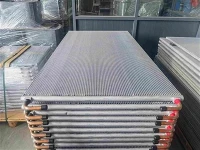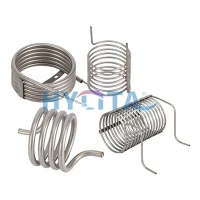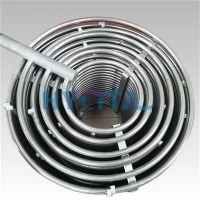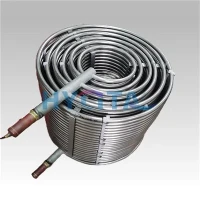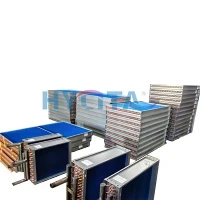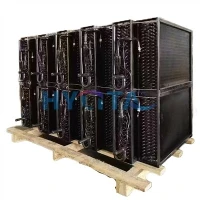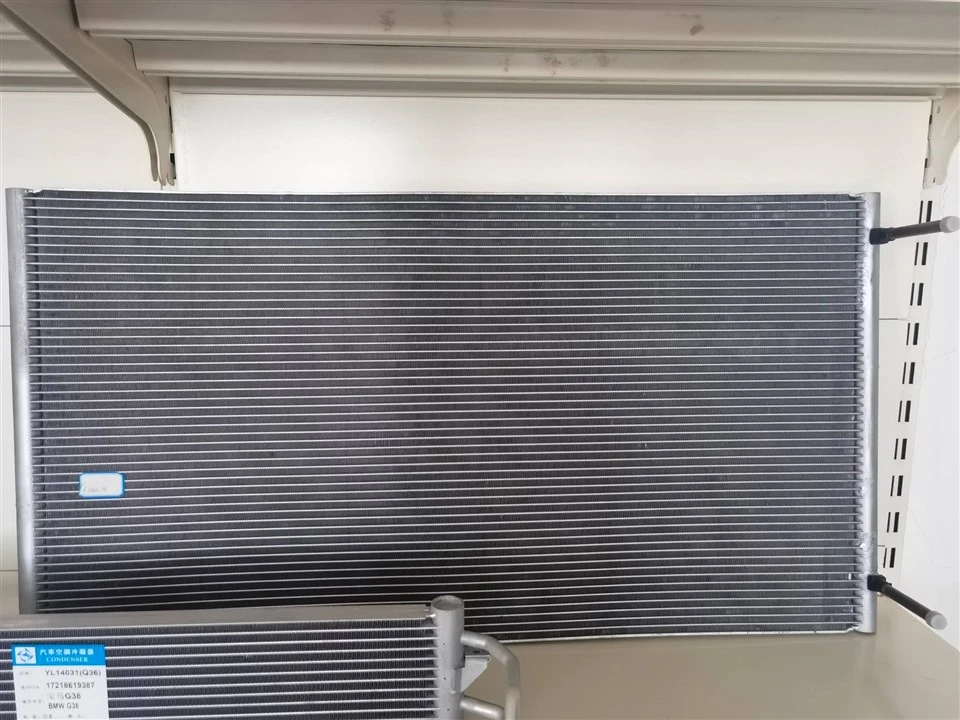
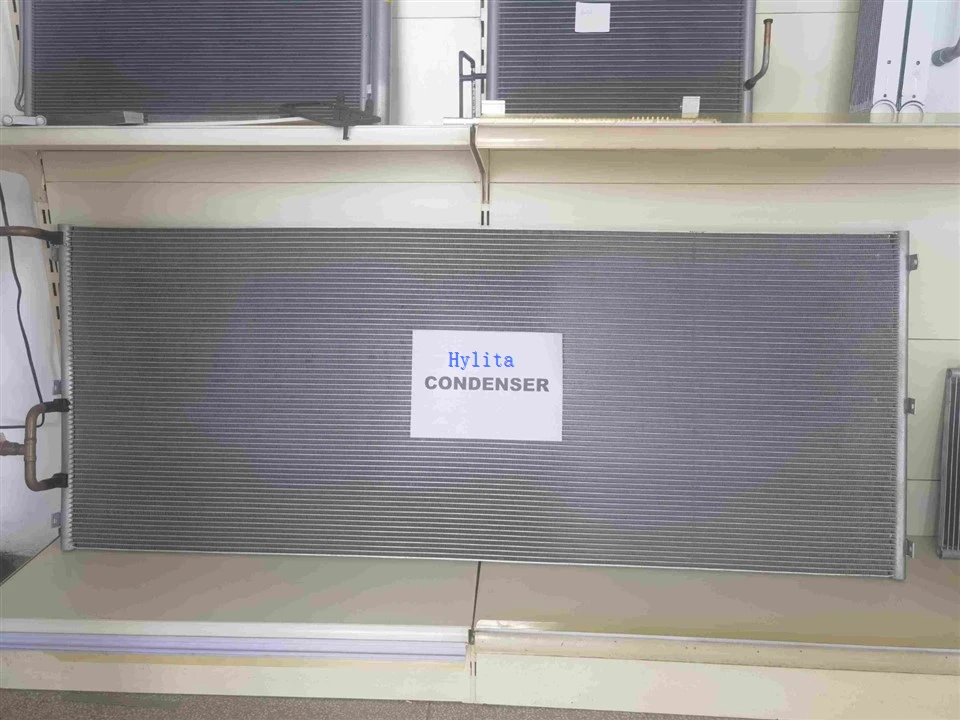


Manufacturing Process of Microchannel Coils (MCHEs)
The production of MCHEs is a precision-driven process that integrates material science, extrusion molding, and thermal joining technologies, tailored to create ultra-small flow channels (0.1–2 mm) for efficient heat transfer. The key steps are as follows:
1. Aluminum Alloy Material Preparation
MCHEs primarily use aluminum alloys (e.g., 3003, 6061) due to their lightweight, high thermal conductivity, and cost-effectiveness.
Material Selection: High-purity aluminum ingots are mixed with alloying elements (magnesium, silicon) to enhance mechanical strength and corrosion resistance, meeting ASTM B209 or EN 573-3 standards.
Preprocessing: Ingot surfaces are degreased (using alkaline cleaners) and pickled (with dilute nitric acid) to remove oxides, oils, or impurities-critical for ensuring uniform extrusion and brazing quality later.
2. Microchannel Flat Tube Extrusion
This step forms the "core" of MCHEs: flat tubes with multiple parallel microchannels.
Extrusion Setup: A heated aluminum alloy billet (450–500°C) is pushed through a precision-engineered die (with microchannel-shaped cavities) via a hydraulic press. The die design directly determines channel size (typically <1 mm for high-efficiency models) and distribution.
Size Calibration: The extruded flat tube is cooled rapidly (via air or water quenching) to maintain dimensional stability, then cut to the required length (from 0.5 m to 6 m, depending on application).
Quality Check: Laser micrometers verify channel diameter, wall thickness, and flatness-tolerances are controlled within ±0.02 mm to avoid flow resistance inconsistencies.
3. Fins Stamping & Forming
Fins are added to the flat tubes to expand the heat transfer surface area (a key factor in MCHE efficiency).
Stamping Process: Aluminum sheets (0.1–0.2 mm thick) are fed into a precision stamping press to create fin patterns-common designs include louvered fins (for enhanced airflow turbulence) or corrugated fins (for compactness).
Pre-Coating Treatment: Fins may undergo surface treatment (e.g., chromate conversion coating) to improve adhesion with brazing flux and enhance post-brazing corrosion resistance.
4. Core Assembly (Tube-Fin Stacking)
Flat tubes and fins are assembled into a "heat exchanger core"-the basic functional unit.
Layered Stacking: Flat tubes are aligned in parallel, with fins inserted between adjacent tubes to form a sandwich-like structure. Temporary clamps hold the assembly in place to prevent misalignment.
Gap Control: The gap between tubes and fins is kept at <0.05 mm to ensure full contact during brazing, minimizing thermal resistance at the interface.
5. Vacuum Brazing (Thermal Joining)
Vacuum brazing is the critical step that permanently bonds flat tubes and fins into a leak-tight core-unlike traditional soldering, it ensures high structural strength and thermal conductivity.
Flux Application: A thin layer of aluminum-silicon (Al-Si) brazing flux (melting point ~577°C) is sprayed or dipped onto the assembled core to prevent oxidation during heating.
Vacuum Furnace Processing: The core is placed in a vacuum furnace (pressure <10⁻³ Pa) and heated to 580–620°C. At this temperature, the flux melts and flows along the tube-fin interfaces, while the aluminum base material remains solid. The vacuum environment eliminates air bubbles, ensuring uniform brazing.
Cooling: The furnace is cooled slowly (50–100°C/hour) to reduce thermal stress, preventing microcracks in the microchannels.
6. Cutting & Port Machining
The brazed core is processed to add connection ports for fluid inlet/outlet.
Core Cutting: A CNC saw cuts the core to the final product size (e.g., 300×400 mm for commercial freezer MCHEs), with coolant used to avoid heat-induced deformation.
Port Drilling & Tapping: The ends of the flat tubes are drilled to form manifold ports, then tapped to add threads (e.g., M10 or 1/4 NPT) for connecting refrigerant lines. Deburring tools remove metal shavings to prevent channel blockages.
7. Pressure Testing & Leak Detection
MCHEs require strict leak-tightness (critical for refrigerant-based applications like AC or refrigeration).
Pressure Test: The core is filled with high-pressure nitrogen (1.5–2 times the design working pressure, typically 2–3 MPa) and held for 30–60 minutes. Pressure gauges monitor for drops-any loss >0.01 MPa indicates a leak.
Helium Leak Detection: For high-precision applications (e.g., automotive AC), helium mass spectrometry is used to detect micro-leaks (sensitivity down to 1×10⁻⁹ Pa·m³/s).
8. Surface Treatment & Anti-Corrosion Coating (Optional)
For MCHEs used in harsh environments (e.g., marine or high-humidity settings), additional corrosion protection is applied:
Coating Application: Phenolic resin, epoxy, or fluoropolymer coatings are sprayed or electrophoresed onto the core surface. The coating thickness is controlled at 20–50 μm to balance corrosion resistance and heat transfer efficiency.
Curing: The coated core is baked at 120–180°C for 30–60 minutes to cure the coating, forming a dense, impermeable layer.
9. Final Quality Inspection & Packaging
Comprehensive Testing: Inspectors check dimensions (via coordinate measuring machines), (for brazing defects like cracks or flux residues), and perform random heat transfer efficiency tests (using a wind tunnel to measure heat exchange rate under standard conditions).
Packaging: Qualified MCHEs are wrapped in moisture-proof film and packed in foam-lined cartons to prevent damage during transportation.
This process ensures MCHEs meet the strict performance requirements for applications such as commercial refrigeration, automotive air conditioning, and HVAC systems-balancing efficiency, compactness, and reliability.
HYLITA is equipped with fully automated production and assembly lines, fully automated brazing production lines, and fully automated helium leak testing lines.
1. Fully Automated Assembly Equipment
Fully Automated Stamping Lines for Key ComponentsResulting in a 49% increase in quality reliability and a 67% improvement in the supply efficiency of non-standard components.
Fully Automated Finished Product Assembly LinesEnabling a 51% boost in assembly efficiency and improving quality stability to 99.8%.
2. Fully Automated Brazing Equipment
Fully Automated Production Lines with Tunnel-Type Brazing FurnacesLeading to a 53% rise in quality reliability, with the pass rate of brazed finished products reaching 99.7%.
Fully Automated Production Lines with Vacuum Brazing FurnacesAchieving a 57% increase in quality reliability, with the pass rate of brazed finished products reaching 99.7%.
3. Fully Automated Coating/Testing Equipment
Fully Automated Surface Coating Production LinesDelivering a 55% improvement in quality reliability, with the pass rate of coated finished products reaching 99.8%.
Fully Automated Vacuum Helium Leak Testing Lines100% of all products undergo vacuum helium leak testing, ensuring a 100% qualification rate for helium leak testing before delivery.
Hot Tags: washing machine drying microchannel condenser, China washing machine drying microchannel condenser manufacturers, suppliers, factory